2026-06-04
Lifting in Your 20s: Are Non-Surgical Procedures Enough? Causes of Sagging by Age and Customized Solutions
Lifting is not simply determined by age, but depends on the degree of skin sagging and its underlying causes. From your 20s to your 50s and beyond, 345 Plastic Surgery clearly outlines the characteristics of each age group and customized lifting strategies to help you choose between non-surgical procedures and surgery.

The Standard for Lifting is Determined by 'Skin Condition', Not Age
During consultations, many patients often ask, "Is there a specific lifting procedure suited for my age?" However, the core of lifting lies in the current elasticity of the skin, the amount of fat, and the degree of sagging, rather than the patient's actual age. While a patient in their 70s might achieve satisfactory results with a simple non-surgical procedure depending on their skin condition, someone in their 20s might require a surgical approach like a facelift due to a history of previous surgeries or drastic physical changes.

Lifting in Your 20s: Reasons and Cases Where Non-Surgical Procedures Are Enough
Aging typically begins around the age of 25, but when individuals in their 20s consider lifting, it is usually accompanied by a distinct cause. Typical examples include soft tissue changes after facial contouring surgery or fat grafting, or volume loss due to extreme short-term dieting.
- Key Characteristics: Good skin elasticity and a minimal amount of sagging.
- Recommended Methods: Non-surgical procedures such as thread lifting, Ultherapy, and Thermage.
- Expected Effects: Noticeable contour refinement and elasticity improvement can be expected with relatively simple procedures.


Lifting for Those in Their 30s and 40s: Mini Facelift and Lower Face Improvement
The 30s is a period when facial volume changes rapidly due to childbirth or weight fluctuations. Entering the 40s, the pace of aging accelerates, and changes centered around the lower face become more pronounced.
Lifting Strategy for Your 30s
This is the point where you may consider moving beyond simple procedures to a 'mini facelift' involving incisions, if necessary. Since this is the stage where aging begins in earnest, early management is advantageous.
Lifting Strategy for Your 40s
Thanks to their cheekbone structure, Asians tend to experience less mid-face sagging, but nasolabial folds, marionette lines (wrinkles around the mouth), and a collapsing jawline become prominent. Rather than simply pulling sideways, a three-dimensional approach that delicately lifts the sagging occurring at the bottom from the top is crucial.


Facelifts for the 50s and Beyond: A Choice for Fundamental Improvement
After the 50s, skin aging and sagging have often accumulated. If the skin condition is good due to consistent care, a thread lift or mini facelift might be sufficient, but the majority will consider a full facelift as a more fundamental solution.

A facelift is a surgery that not only pulls the outer surface of the skin but also corrects the SMAS (Superficial Musculoaponeurotic System) layer beneath the skin to enhance the duration and effectiveness of the improvement. Harmoniously reversing the accumulated changes is the key.
The Core of a Successful Lift: Volume Control and Naturalness
Lifting is not just a procedure of pulling. It must be accompanied by 'volume control,' where sunken areas are filled with fat grafting or fillers, and unnecessarily protruding fat is repositioned or removed. Only then can you achieve natural, non-artificial results.
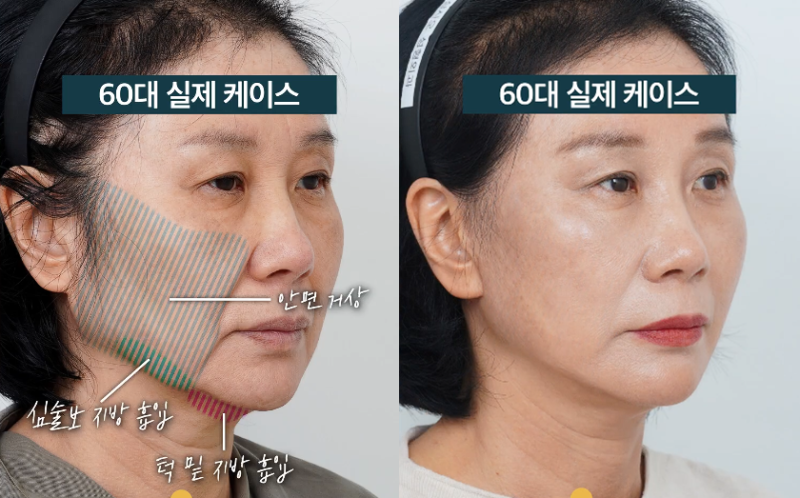
Since the recovery process and results can vary depending on an individual's anatomical structure and skin characteristics, it is important to establish the most suitable plan for yourself through a detailed consultation with experienced medical professionals.



Frequently Asked Questions
Do people in their 20s also need surgical lifting like a facelift?
Yes, it may be necessary if there is a history of past surgeries or rapid changes. Generally, people in their 20s have good skin elasticity, and non-surgical procedures like thread lifts or Ultherapy are sufficient, but in cases of severe sagging due to facial contouring surgery or extreme dieting, a surgical approach may be considered.
What are the main lifting strategies for people in their 30s and 40s?
The main strategy is to improve sagging in the lower face and consider a mini-facelift if necessary. In their 30s, volume changes due to childbirth or weight fluctuations are common, and in their 40s, nasolabial folds and a collapsing jawline are prominent, making a precise, three-dimensional approach that lifts from the bottom up crucial.
Why is a facelift recommended for people aged 50 and above?
A facelift allows for fundamental improvement by correcting the underlying SMAS layer of the skin. After age 50, skin aging and sagging are cumulative, so lifting not just the surface but also the deeper layers is essential to enhance the duration and effectiveness of the improvement.
How can I achieve natural results with lifting procedures?
Beyond simply pulling the skin, volume adjustment must be performed concurrently. The key is to fill sunken areas with fat grafting or fillers and redistribute or remove unnecessarily protruding fat to harmonize the overall balance of the face.