2026-06-04
Facial Contouring Swelling Recovery Process: A Comprehensive Guide to Changes from Day 7 to 6 Months
We provide a detailed explanation of the swelling recovery process after facial contouring surgery, from major swelling on day 7 to the stabilization phase at 6 months, along with real cases. By outlining the physical changes and precautions over time following facial bone surgeries such as cheekbone, square jaw, and front chin reduction, we aim to alleviate patients' anxieties.

Swelling After Facial Contouring Surgery: Why Does It Happen and How Does It Change?
Facial contouring surgery is a highly complex procedure that directly addresses the fundamental bone structure of the face, including the cheekbones, square jaw, and front chin. As bones are resected and repositioned, the surrounding soft tissues and muscles react, making swelling a very natural part of the recovery process. The 'time to recover' is just as important as the surgical outcome itself. Let's examine the stage-by-stage changes in facial contouring swelling through a real 3-type facial contouring surgery case from 345 Plastic Surgery.
Summary Table of Facial Contouring Recovery Stages
| Period | Major Changes | Characteristics |
|---|---|---|
| Up to Week 1 | Acute swelling (Major swelling) | The face feels firm and contours appear blunt |
| Month 1 | Minor swelling begins to subside | Visible volume gradually decreases |
| Month 3 | Contour lines become visible | Facial width narrows and lines become defined |
| Month 6 | Tissue stabilization | The final surgical results settle into place |
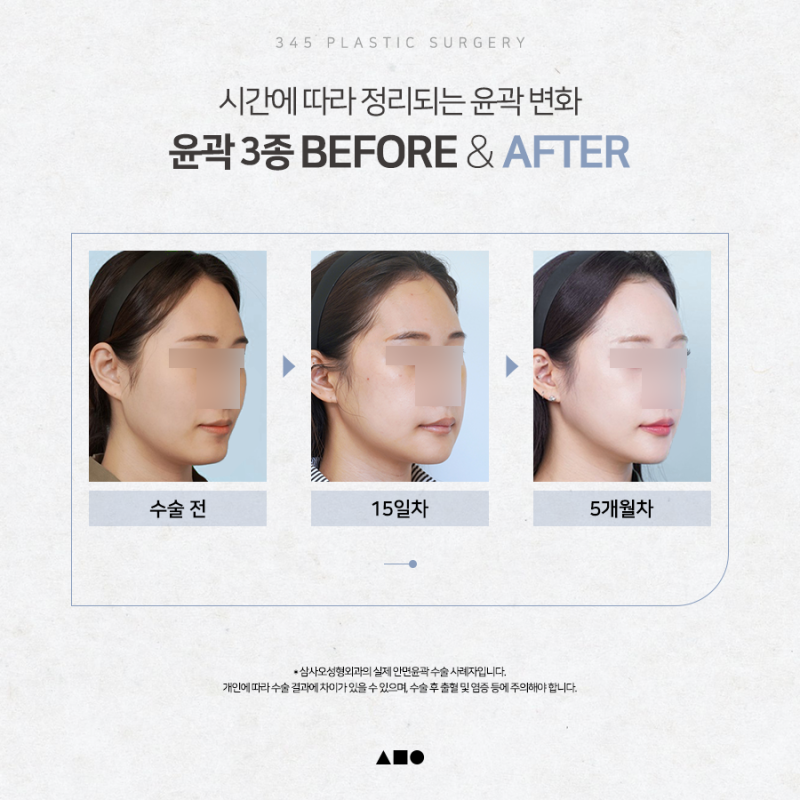
[Week 1] The Period of Most Pronounced Swelling and Tension
From immediately after the surgery up to one week, swelling reaches its peak. The soft tissues surrounding the bones react to the surgical stimulation, causing facial contouring swelling to be most prominent.

- Tissue Reaction: The face feels firm overall, and the sense of expansion may make the contour lines look even blunter than before the surgery.
- Psychological State: It is easy to feel anxious because the face appears larger than usual, but you can rest assured as this is a normal reaction for recovery.
[Months 1~3] The Stage Where Major Swelling Subsides and Lines Emerge
After one month post-surgery, noticeable major swelling is significantly alleviated. From this period onward, the actual contours of the face slowly begin to reveal themselves.

However, unlike the visible external recovery, swelling on the inside of the bones, namely the deep tissue swelling, may still remain. During this time, the face may look slender from the front but can still appear swollen from the side or at certain angles.

As you enter the third month, most of the major swelling resolves, and the facial width and lines planned before surgery gradually become distinct. This is a period when patients' satisfaction with the surgery increases and they find psychological stability.
[Months 4~6] Soft Tissue Stabilization and Completion of Final Results
Between 4 to 6 months post-surgery, the overall progression of the facial contouring surgery results enters the stabilization phase.

- Tissue Adhesion: Soft tissues, including skin and muscles, firmly adhere to the newly established bone lines.
- Balance Completion: The overall balance of the face is clearly refined. Although there are individual differences, the appearance observed during this period is practically close to the final result.
345 Plastic Surgery's Precise Facial Contouring Surgery System
A successful recovery begins with a precise surgery. Dr. Park Jong-rim of 345 Plastic Surgery aims for a delicate approach that goes beyond simple bone resection, taking into account the burden of post-operative recovery.
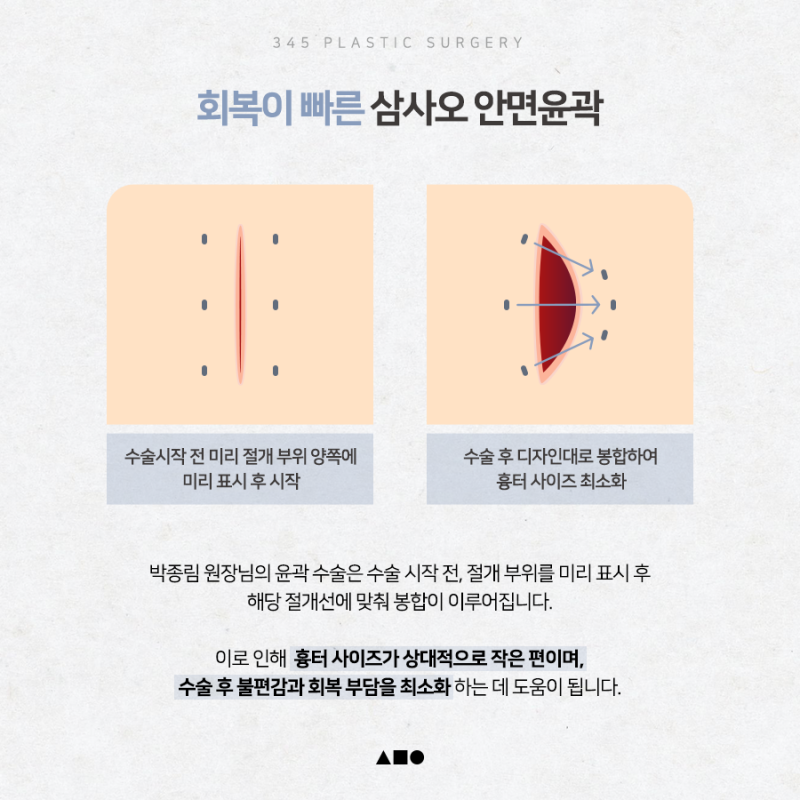
By accurately designing the incision site before surgery and performing precise suturing aligned with that line, unnecessary tissue damage is reduced. Consequently, this serves as the foundation for minimizing swelling and aiding in a rapid recovery.
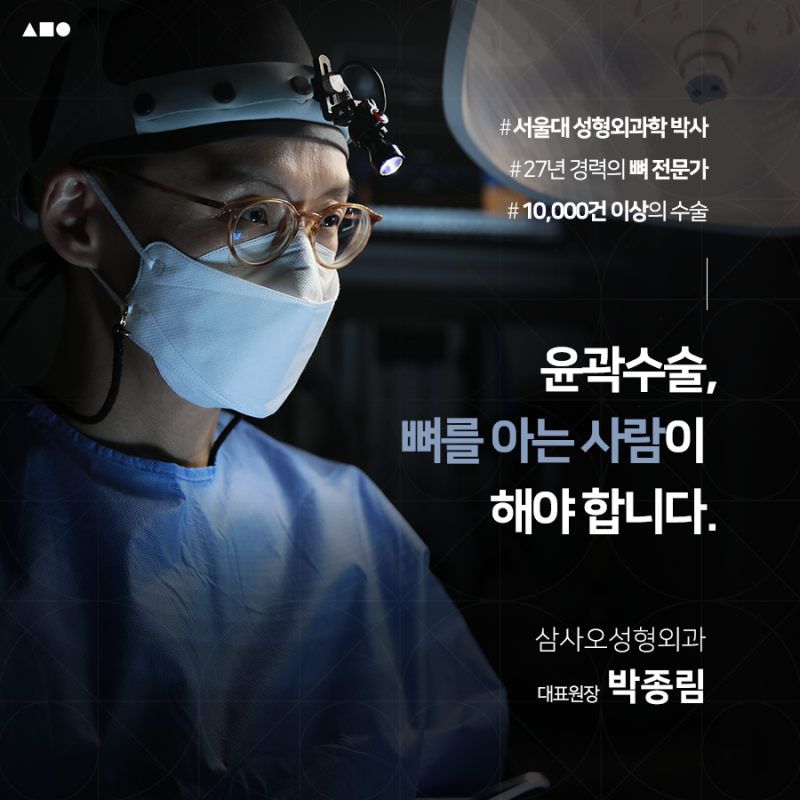
If you are considering facial contouring surgery, please make sure to check whether the clinic provides systematic care not only for the surgical results but also for the entire process of those changes settling in.



Frequently Asked Questions
When is the swelling most severe after facial contouring surgery?
Swelling is most severe from immediately after surgery up to one week. Acute swelling occurs as the soft tissues around the bone react to irritation, and the face may appear firm and dull, but this is a normal part of the recovery process.
Can I still look swollen even a month after surgery?
Yes, while the visible major swelling subsides, swelling in the deeper tissues may still remain. At the one-month mark, even if your face looks slimmer from the front, it may still appear swollen from the side or at certain angles, which will gradually improve.
When can I see the final results of facial contouring surgery?
You can usually see the final results between 4 to 6 months after surgery. By this time, the skin, muscles, and other soft tissues will have firmly adhered to the newly positioned bone lines, clearly defining the overall balance of the face.
What are the ways to minimize swelling after facial contouring surgery?
Minimizing tissue damage through precise surgery is key. Reducing unnecessary damage with accurate incisions and precise suturing can minimize swelling, and receiving systematic post-operative care from the hospital helps with recovery.