2026-06-04
Worried About Sagging After Facial Contouring? A Complete Guide to Causes, Prevention, and Solutions
One of the biggest concerns before undergoing Facial Contouring surgery is 'skin sagging'. The degree of sagging can vary depending on individual skin elasticity, the thickness of the fat layer, and the amount of bone reduction. At 345 Plastic Surgery, we provide detailed information on the causes of sagging after facial contouring and customized solutions to prevent and improve it.
Does Skin Sagging Really Occur After Facial Contouring Surgery?
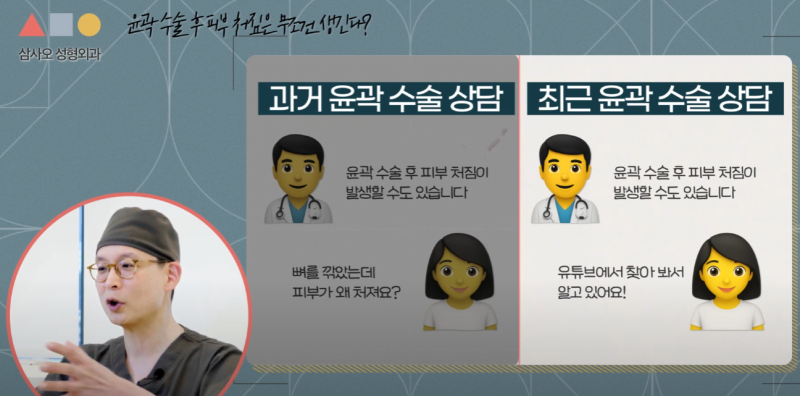
One of the most frequently asked questions by those considering facial contouring surgery is, "Will my skin sag after the surgery?" Recently, as more information is shared, an increasing number of people are worrying about sagging even before their procedure.
To give you the conclusion first, the skin's natural ability to shrink and adapt after surgery varies greatly from person to person. While some people's skin contracts well to match the changes in the bone, others with relatively lower elasticity may experience some sagging. However, in most cases, this appears as a subtle change rather than noticeable, severe sagging, and it can be fully improved through precise diagnosis and appropriate procedures.
Cases and Characteristics More Prone to Sagging After Facial Contouring
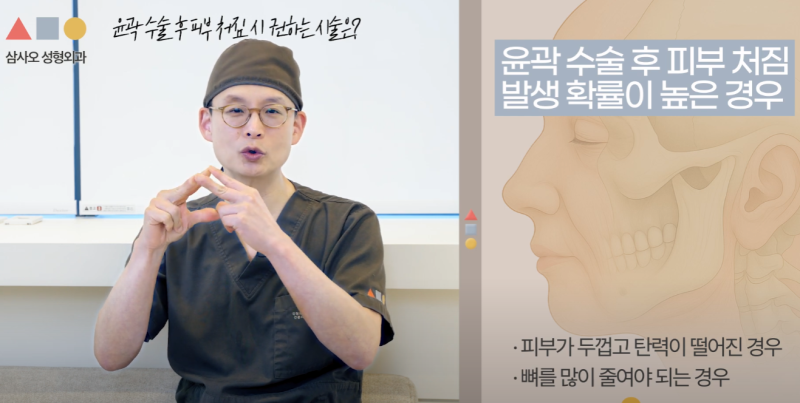
Skin sagging is highly influenced by an individual's skin condition and anatomical factors. In particular, if you have the following characteristics, a detailed plan to prevent sagging is necessary during your consultation.
- Weak skin elasticity: If your skin tissue is naturally delicate or aging has progressed, the skin may lack the strength to contract on its own.
- Thick fat layer and excess facial fat: Due to the weight of the fat, the face is more affected by gravity, which can make sagging more pronounced.
- Large amount of bone reduction: As the skeletal structure is reduced, excess skin remains, creating empty space that can lead to sagging.
Expected Improvement Methods if Sagging Occurs
If sagging does occur after facial contouring, we can approach it in two main ways depending on the cause to help ensure a positive recovery.
1. When excess fat bulges out
In this case, you can expect a smoother jawline by organizing the remaining soft tissue through Liposuction or laser Lifting procedures that enhance skin elasticity.
2. When the skin droops downwards
If the issue is not simply fat but the skin itself has stretched, you can consider combining surgical lifting methods such as thread lifting or a facelift to pull the sagging tissue back to its original position.
Pre- and Post-Op Diet and Tips for a Successful Consultation
Many people are also curious about the best time to lose weight before or after facial contouring surgery. While there is no single right answer, we generally recommend starting your diet **after the surgery**. Immediately following the procedure, you will naturally eat less as you must be careful with food intake. If you use this as a starting point to continue healthy weight loss, you can achieve an even more defined facial line.
Additionally, bringing photos of celebrities that reflect your preferred image to the consultation is very helpful. This allows the medical team to accurately grasp the subtle vibe that is difficult to express in words, enabling them to analyze the optimal design suited to your facial bone structure.
The Importance of a Customized 1:1 Precise Diagnosis
Since facial contouring is a highly difficult surgery that deals with bones, careful decision-making is required from the very beginning. Rather than unconditionally recommending surgery, a process of confirming how much improvement you can achieve through contouring surgery using precise examinations like 3D CT must come first. If you are confident in the necessary procedures and sagging prevention plans through sufficient consultation with the medical team, you will be able to experience highly satisfying changes.