2026-06-04
3-Type Facial Contouring Review: A Comprehensive Guide to Swelling Changes and Recovery Stages
We explore the swelling changes and recovery process after 3-type facial contouring (cheekbone, square jaw, and genioplasty) surgery in detail through a real-life case of a patient in her 20s. From contour changes over time to post-op precautions, our expert editor summarizes the key information for achieving a harmonious face shape.

What is 3-Type Facial Contouring Surgery? (Cheekbone, Square Jaw, Genioplasty)
Facial contouring surgery refines the overall bone structure of the face to create a smooth and harmonious line. Commonly referred to as '3-type contouring,' this surgery includes cheekbone reduction (zygoma reduction), square jaw surgery (mandibular angle resection), and front chin surgery (genioplasty). It is a method that reduces the horizontal width of the face and smooths out prominent angles, allowing you to expect a softer and more refined impression.
Before surgery, many people have a vague fear of the recovery period and swelling because it is a surgery that deals with bones. However, if you accurately understand the recovery process at each stage, you can plan your surgery with greater peace of mind.
Facial Contouring Swelling Changes and Recovery Progress by Stage
Let's take a look at the progress from immediately after surgery up to 4 months through the real-life case of a female patient in her 20s.
1. 7 Days Post-Op: The Peak of Major Swelling
The first week after surgery is when 'major swelling' is most noticeable. The initial recovery of the intraoral incision site is underway, and the face may feel somewhat round and tight. This is a natural process of tissue healing.
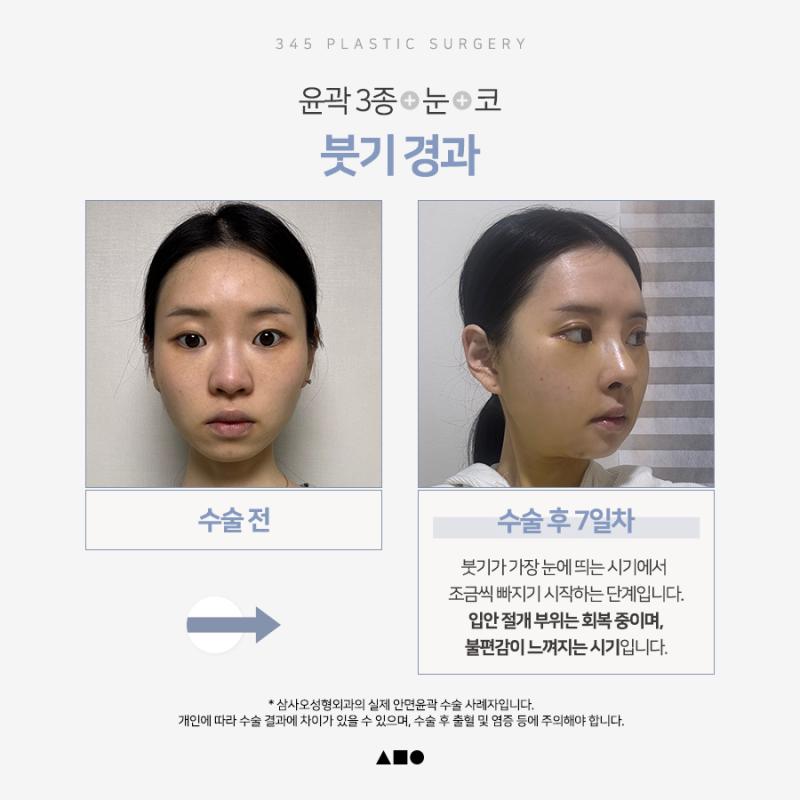
2. 2 Weeks Post-Op: Reduction of Minor Swelling and Bruising
After about two weeks, the major swelling gradually begins to subside. At this time, yellow bruising may appear or certain areas may feel dull or numb, but this will gradually improve over time. Light walking can help with blood circulation and have a positive effect on reducing swelling.
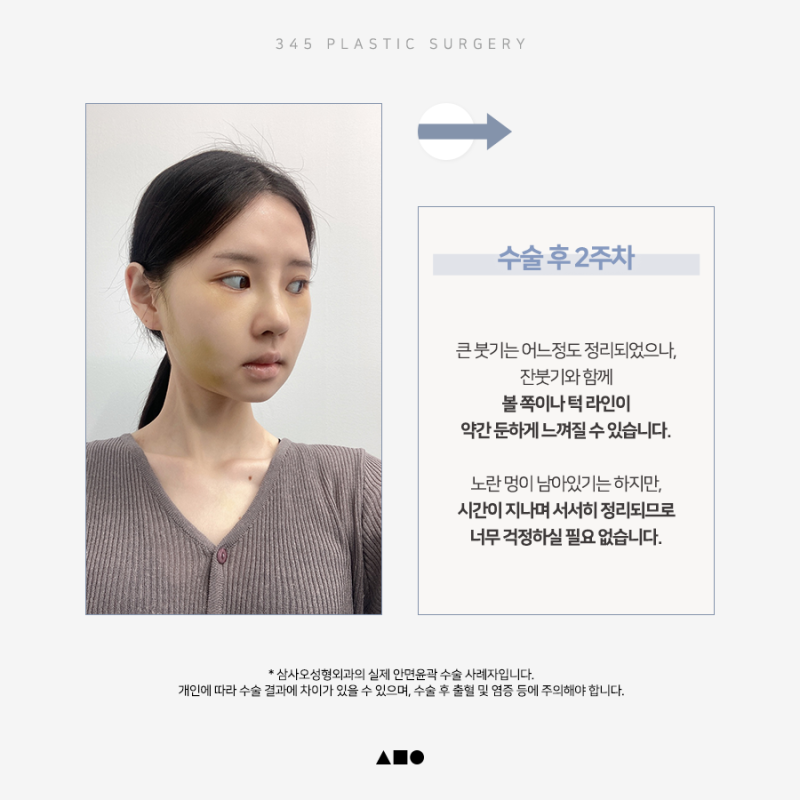
3. 1 Month Post-Op: Revealing the Facial Contours
After about a month, the overall contours of the face begin to show. The cheekbones and jawline connect smoothly, and you will feel that the width of the face has been refined. However, firmness when touched (biobond phenomenon) or temporary sensory dullness may remain, though this usually does not significantly interfere with daily life.

4. 2 to 4 Months Post-Op: Natural Settling
During this period, any artificial feeling disappears, and the contours settle naturally as if they were your original face shape. You can see a smooth connection not only from the front but also from the side, and as the minor swelling almost completely subsides, it gets closer to the final line.

Key Points for Successful Facial Contouring
- Meticulous Incision and Suturing: Intraoral incisions, in particular, require highly precise suturing techniques to prevent infection and promote rapid recovery.
- Overall Balance: It is not about simply shaving off a lot of bone, but rather a customized design that considers harmony with your facial features is crucial.
- Systematic Aftercare: You should choose a clinic that monitors post-operative swelling and sensory changes and provides appropriate care.
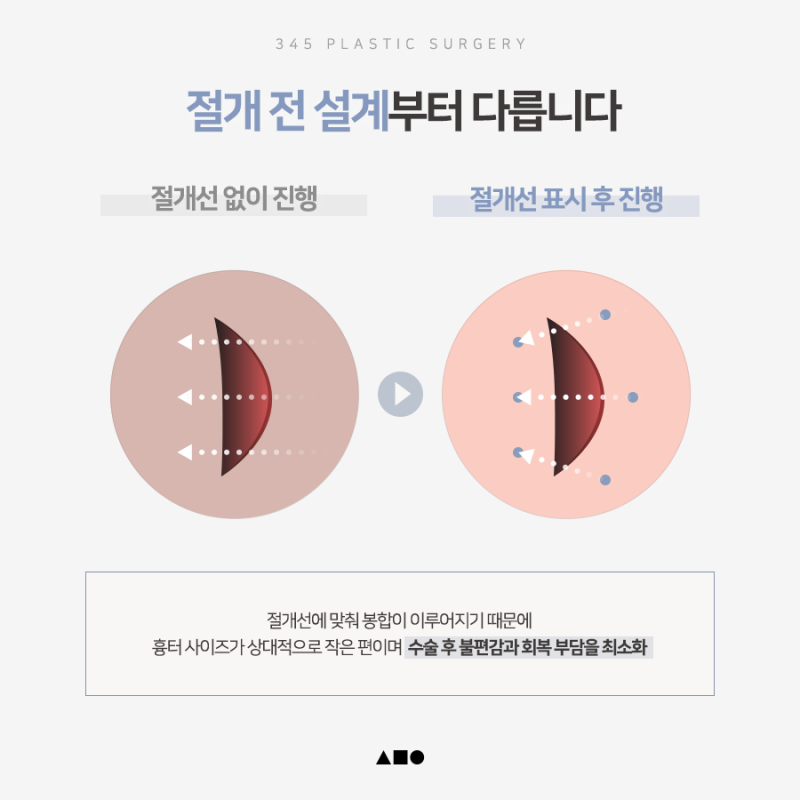
Expertise and Reliability of the Medical Team
Facial contouring surgery is a field that requires a high degree of expertise. Dr. Park Jong-lim, the Chief Director of 345 Plastic Surgery, meticulously monitors everything directly from the precise pre-operative design to the post-operative recovery process, striving for the patient's psychological stability and excellent results. A consultation that accurately analyzes the characteristics of your current bone structure and soft tissues must precede the surgery.




Frequently Asked Questions
What surgeries are included in the 3-point facial contouring surgery?
Yes, it includes cheekbone reduction surgery, square jaw reduction surgery (mandibular angle reduction), and chin surgery (genioplasty). This surgical method can reduce the horizontal width of the face and refine prominent angles, leading to a smoother and more harmonious facial line.
When does the major swelling start to subside after surgery?
Major swelling gradually begins to subside approximately 2 weeks after surgery. The most noticeable swelling occurs around 1 week post-surgery, and from 2 weeks onwards, yellow bruising or dull sensation may appear but will gradually alleviate. Light walks can help with swelling reduction.
When can I return to daily life after surgery?
Generally, there are no significant disruptions to daily life about 1 month after surgery. At this time, the overall facial contour begins to become visible, and the cheekbones and jawline connect smoothly. However, biobond phenomena, which feel firm to the touch, or temporary sensory loss may still remain.
When is the final facial line completed after facial contouring surgery?
It naturally settles between approximately 2 to 4 months after surgery. By this time, the artificial feeling disappears, and even residual swelling is almost gone, approaching the final line with a smooth connection from both frontal and side views.
What should be considered for successful facial contouring surgery?
It is most important to have a customized design that considers harmony with the facial features, rather than simply shaving off a lot of bone. Furthermore, you should choose a hospital with meticulous suturing techniques for the intraoral incision site and a systematic post-operative care system that checks for swelling and sensory changes after surgery.