2026-06-04
Review of 3-Point Facial Contouring and Paranasal Augmentation for Asymmetry: How to Smooth Out Bumpy Lines
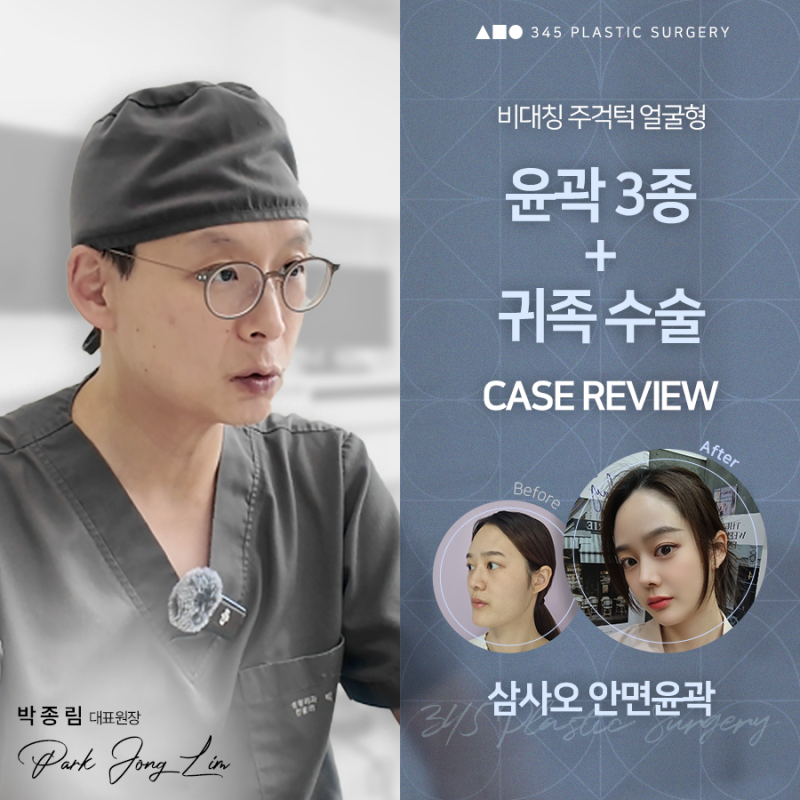
We introduce a real case of a 24-year-old female patient who underwent 3-point facial contouring and paranasal augmentation to address her bumpy and asymmetrical face shape. We summarize the process of balancing her long chin, cheekbones, and square jaw while improving mid-face volume to achieve a softer impression, along with professional medical insights.
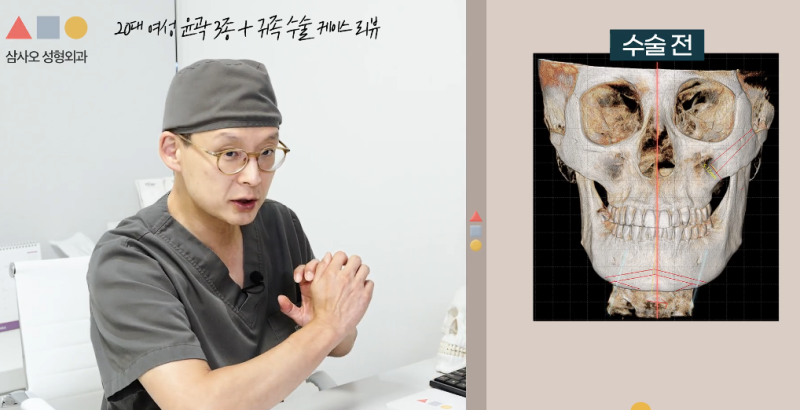
Asymmetrical and Bumpy Face Shapes: Accurate Diagnosis Comes First
If you notice bumpy facial lines or left-right asymmetry every time you look in the mirror, you should first examine your skeletal structure rather than simply suspecting a skin elasticity issue. The 24-year-old female patient we are introducing today visited our clinic with the concern that "my face looks angular and my lower jaw appears long."
Visual examination and CT scans revealed that her chin was actually somewhat long, and her lower jaw protruded forward compared to her mid-face. Fortunately, her dental occlusion was not a typical underbite, but the curves of her cheekbones and square jaw line gave her an overall strong and harsh impression.
Causes of Facial Asymmetry: Bone Rotation and Tilting
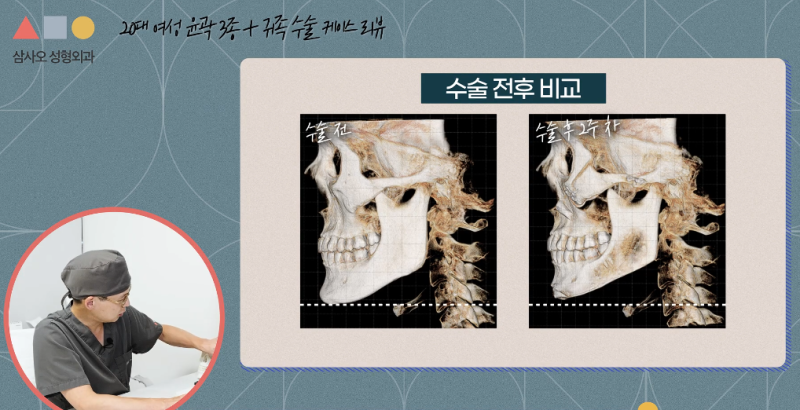
Preoperative CT analysis revealed an overall misalignment based on the central axis of the face. The phenomenon where the central axis of the neck does not align with the center of the face often stems from tilting caused by poor posture or habits in daily life.
In particular, because the bones themselves were slightly rotated or tilted, a precise plan was required to balance the face by adjusting the amount of resection differently on the left and right sides, rather than simply shaving the bone down. When addressing such asymmetry, the focus should be on finding harmony across the entire face rather than achieving perfect symmetry.
A Complex Solution: 3-Point Facial Contouring and Paranasal Augmentation
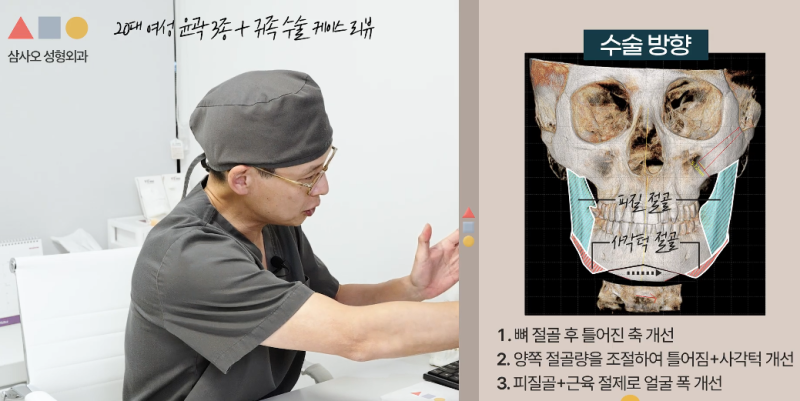
To resolve the patient's concerns, we established the following customized surgical plan.
- Genioplasty (Chin Surgery): The chin was osteotomized, moved upward and backward to reduce its length, and the misaligned central axis was shifted in the opposite direction to improve asymmetry.
- Mandibuloplasty (Square Jaw Surgery): The resection amount was set differently according to the left and right height differences, and cortical bone (outer surface of the bone) resection was combined with masseter (jaw muscle) reduction to enhance the frontal effect.
- Malarplasty (Cheekbone Reduction): Through an L-shaped osteotomy, the cheekbones were pushed inward to narrow the facial width and smooth out the bumpiness.
- Paranasal Augmentation (Noble Surgery): Bone grafting was performed on the sunken areas next to the nose to fill the mid-face volume. This provides a visual effect that makes the chin appear relatively less prominent.
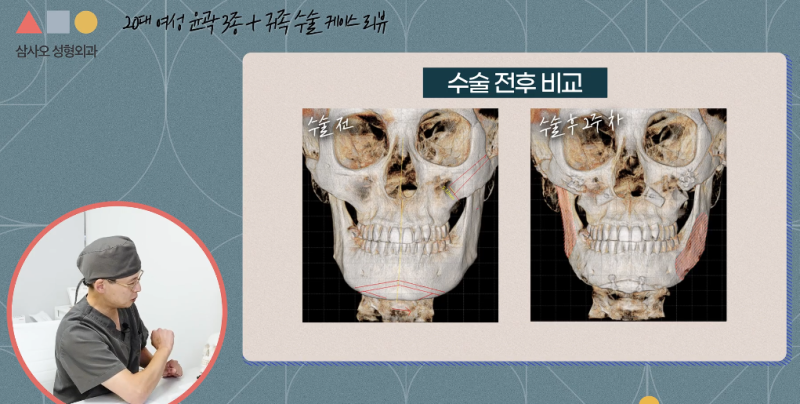
Clear Changes Seen Through Before-and-After Comparison
The most significant change confirmed through the postoperative CT is the alteration in the length of the lower jaw. As the center point of the chin moved to its proper position, the difference in height between the left and right sides was significantly reduced, and the overall facial balance was well-adjusted.
From the side profile, the chin, which previously looked long and protruding, moved backward, resulting in more natural proportions. The square jaw line was also refined into a smooth curve, and the cheekbones were softly improved from both the front and side views. The patient shared a very positive review, stating that her impression became much more feminine and softer after the surgery.
Postoperative Precautions and Care
Since facial contouring is a highly difficult surgery that involves handling bones, care during the recovery period is crucial. Swelling and bruising may occur immediately after surgery, which will gradually subside over about 1 to 2 weeks. Until the surgical site is stably fixed, you should avoid hard or chewy foods and consistently perform gargling and disinfection as guided by the medical staff. Because there is a low probability of side effects such as nerve damage or bleeding, it is essential to visit the clinic regularly to monitor your progress.
Frequently Asked Questions
What are the main causes of facial asymmetry?
Yes, the main cause is skeletal misalignment where the bones themselves are subtly rotated or tilted. Facial asymmetry occurs when the center of the neck and the center of the face do not align due to poor posture or habits.
How is left-right symmetry achieved during a 3-in-1 facial contouring surgery?
It is performed by adjusting the amount of bone resection differently on the left and right sides to achieve overall balance. Rather than simply cutting the bones equally, the misaligned central axis is identified through pre-operative CT analysis, and the left-right height difference of the chin and jaw angle is precisely corrected.
How does '귀족수술' (Nobel surgery) help improve facial contour?
It fills the sunken area next to the nose, creating a visual effect where the chin appears less prominent. By supplementing the volume of the midface through bone grafting, it helps to gently improve a protruding lower jaw and a strong impression.
How long is the recovery period after facial contouring surgery?
Significant swelling and bruising usually subside gradually over 1 to 2 weeks after surgery. As it is a bone-related surgery, it is necessary to avoid hard or chewy foods until the surgical site is stably fixed, and consistent gargling and disinfection, as well as management according to the medical staff's guidance, are required.
Are there any potential side effects after surgery?
Yes, although rare, side effects such as nerve damage or bleeding can occur. Therefore, it is very important to regularly visit the hospital after surgery to check the progress and meticulously follow the post-operative care instructions from the medical staff.