2026-06-04
Criteria for a Foolproof Choice in 3-Type Facial Contouring: Natural Facial Balance is Key
When undergoing 3-type facial contouring (cheekbones, square jaw, and chin), a customized plan that considers the harmony and proportion of the entire face is more important than indiscriminate bone resection. Discover how to achieve natural facial line improvements while minimizing the risk of side effects like cheek sagging or secondary angles, backed by the expertise of Chief Director Park Jong-rim, who has performed over 10,000 bone surgeries.
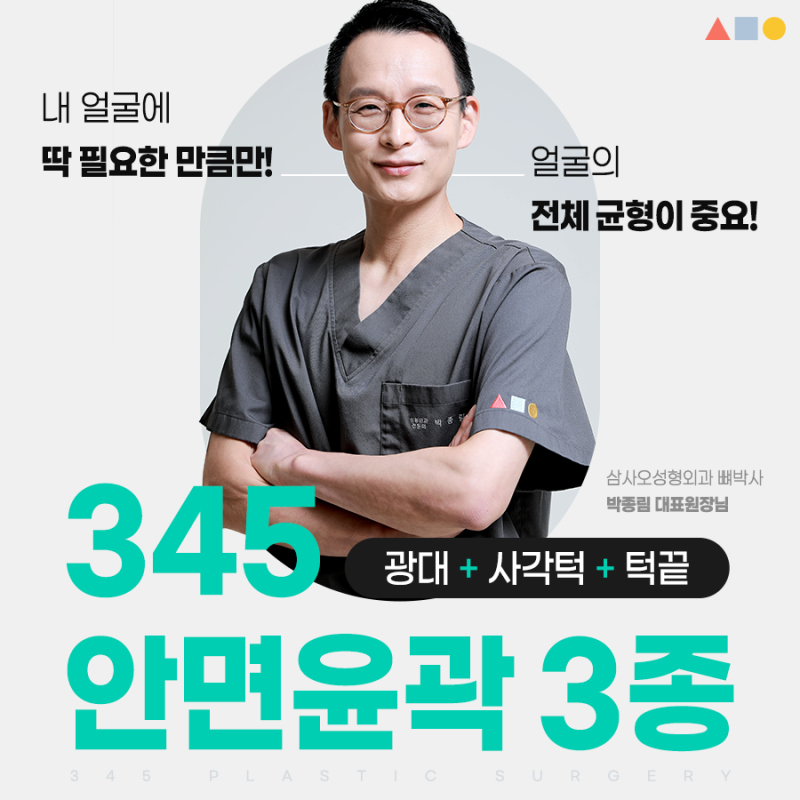
3-Type Facial Contouring, Why is 'Harmony' the Most Important?
Many people consider 3-type facial contouring surgery to achieve a smooth and three-dimensional facial line. 3-type facial contouring refers to the process of refining the overall facial contour by combining cheekbone reduction, square jaw surgery, and chin surgery. However, simply shaving off a lot of bone does not guarantee a beautiful face.
The most important factor is 'optimal resection' that considers the proportions from the forehead to the chin, as well as both frontal and lateral profiles. Indiscriminate resection can create an unnatural impression or cause functional problems, so it is wise to consult with an experienced specialist and choose only the surgeries you truly need.
Core Points by Area: Organic Improvement of the Cheekbones, Square Jaw, and Chin
In 3-type facial contouring, each area is interconnected, making it crucial to achieve overall balance.
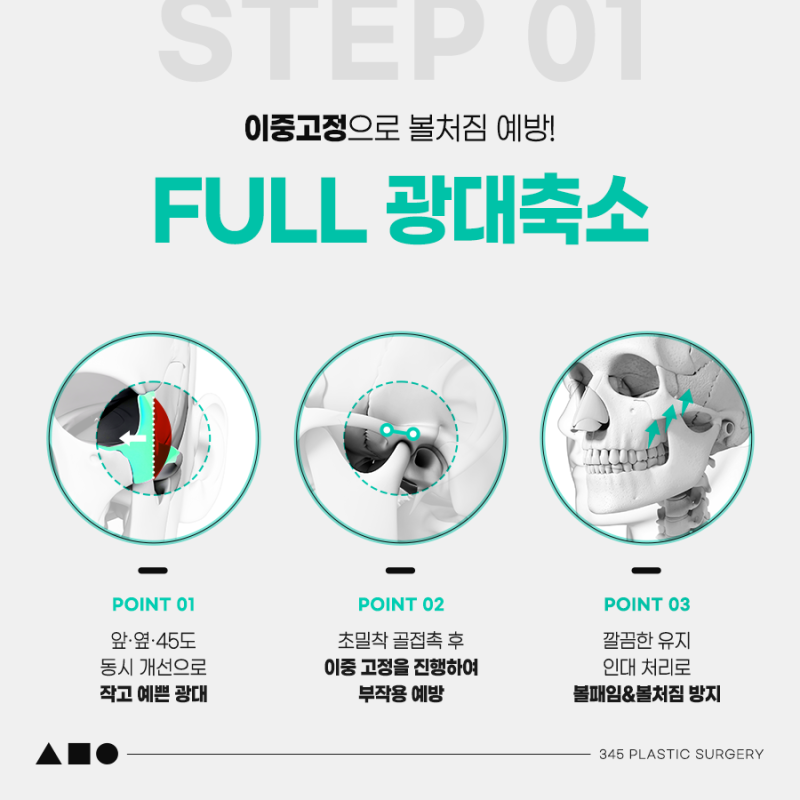
1. FULL Cheekbone Reduction: Dual Fixation to Prevent Cheek Sagging
To prevent cheek sagging and cheek hollowing, which are common concerns after cheekbone surgery, 345 Plastic Surgery applies a dual fixation method. By cleanly managing and firmly fixing the retaining ligaments (tissues that hold the skin and bone together), we aim for a smooth cheekbone line with minimal worries about sagging over time.
2. Long-Curve Square Jaw Surgery: Smooth Lines Without Secondary Angles
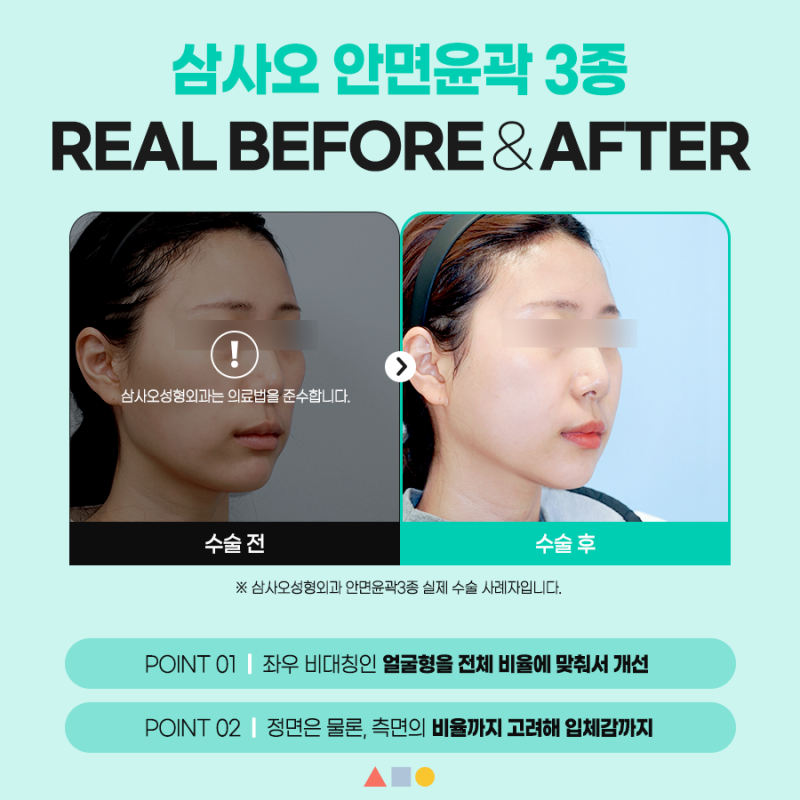
By performing a long-curve resection that cuts continuously from the square jaw under the ear to the front chin, we prevent the 'secondary angle' phenomenon where the jawline looks jagged like stairs after surgery. Through this, we can achieve bilateral symmetry and improve a wide, flat impression into a slim V-line.
3. Chin Surgery: Proportions That Determine Facial Perfection
The chin anchors the center of the overall facial proportions. By reducing or sometimes extending the length of the chin, we balance the proportions of the upper, middle, and lower face. If the horizontal width is broad, narrowing it enhances the facial reduction effect.

Chief Director Park Jong-rim's 1:1 Responsible Surgery and Safety System
Facial contouring is a surgery that requires a high degree of skill. Chief Director Park Jong-rim, known as a bone expert, personally manages the entire process 1:1—from consultation to surgery and progress checks—based on his clinical experience of over 10,000 bone surgeries.
- Personalized Solutions: We establish the optimal plan by analyzing the patient's desired face shape and anatomical structure.
- Safety-First Approach: We draw out the maximum improvement within a safe range by considering not only the bones but also the positions of muscles, fat, and skin tissues.
- Precise Analysis: Utilizing advanced equipment such as 3D-CT, we accurately identify the location of nerve lines and minimize damage.
We Recommend 3-Type Facial Contouring for These Individuals
Rather than simply wanting to make the face smaller, facial contouring surgery can be of great help when you have specific concerns such as the following:
- When the left and right asymmetry of the face is noticeably prominent.
- When the side cheekbones protrude, making the impression look strong and bumpy.
- When the square jaw is developed, making the face look wide and flat.
- When the position or length of the chin does not match the overall facial proportions.
Because facial contouring surgery is difficult to reverse once performed, careful selection is necessary for the first surgery. Approaching it with the goal of complementing your flaws while highlighting your individuality, rather than with excessive greed, brings the best results.
Frequently Asked Questions
What is a 3-point facial contouring surgery?
Yes, 3-point facial contouring is a surgery that combines cheekbone reduction, square jaw surgery, and chin surgery. Through these three surgeries, the overall contour of the face is refined, creating a smooth and立体 facial line by considering the front and side proportions from the forehead to the chin.
I'm worried about cheek sagging as a side effect after cheekbone reduction surgery.
Applying a dual-fixation method can effectively prevent cheek sagging. By neatly treating the retaining ligaments that hold the skin and bone, and firmly fixing them in a dual manner, you can maintain a smooth cheekbone line with less worry about sagging or hollowing over time.
Can the jawline become unnatural after square jaw surgery?
Performing a long-curve osteotomy can prevent the unnatural secondary angle phenomenon. Because the bone is resected in a long and smooth curve from the square jaw behind the ear to the front chin, a slim and symmetrical V-line can be achieved without the side effect of the jawline appearing to be stepped after surgery.
Who is 3-point facial contouring surgery recommended for?
It is recommended for those with severe facial asymmetry or protruding cheekbones. Additionally, if you have a developed square jaw that makes your face look wide, or if the position and length of your chin do not match the overall proportions of your face, significant improvement can be achieved through facial contouring surgery.
Can nerve damage be prevented during facial contouring surgery?
Yes, nerve damage can be minimized by utilizing advanced equipment such as 3D-CT. Through precise analysis before surgery, the exact location of the nerve line is identified, and surgery is performed within a safe range, considering not only the bone but also the position of muscles, fat, and skin tissues.