2026-06-04
2-Type Facial Contouring Review: Achieving a Softer Facial Shape with Square Jaw and Cheekbone Reduction (Including Swelling Changes)
If you are struggling with a peanut-shaped face caused by protruding cheekbones and an angular square jaw, 2-type facial contouring (square jaw + cheekbone reduction) can be the ideal solution. We explore in detail the realistic swelling progression of a working professional in her 30s, along with specialized surgical techniques like long-curve osteotomy and cortical osteotomy.
The Core of Facial Shape Concerns: Is it Muscle or Bone?
Many people stress over an uneven facial line, often referred to as a 'peanut-shaped face,' caused by protruding cheekbones or an angular square jaw when looking in the mirror. In these cases, the issue is often related to the bone structure itself rather than something that can be fixed with simple diets or non-invasive procedures, leading many to consider 2-type facial contouring surgery. Today, we will take a detailed look at the surgical process and recovery period through a real case of a working professional in her 30s.

What is 2-Type Facial Contouring Surgery? (Square Jaw + Cheekbone Reduction)
2-type facial contouring is a surgery that simultaneously corrects the two areas needing the most improvement, tailored to the individual's facial balance. It primarily includes the following technical elements:
- Long-Curve Osteotomy for Square Jaw: A long osteotomy is performed from the angle below the ear to the area near the front chin, creating a smooth jawline without secondary angles.
- Cortical Osteotomy: The outermost layer of the bone is thinly removed to substantially reduce the facial width from the frontal view.
- Tight-Fixation Cheekbone Reduction: The cheekbones are appropriately fractured, repositioned to the optimal location, and firmly fixed to reduce concerns of non-union while enhancing volume.

Real Story and Surgical Plan of a Working Professional in Her 30s
The patient in this case was concerned about her cheekbones appearing particularly prominent due to a lack of facial fat, and her angular jawline making her impression seem strong. She desired a feminine and soft image rather than an unnatural change.
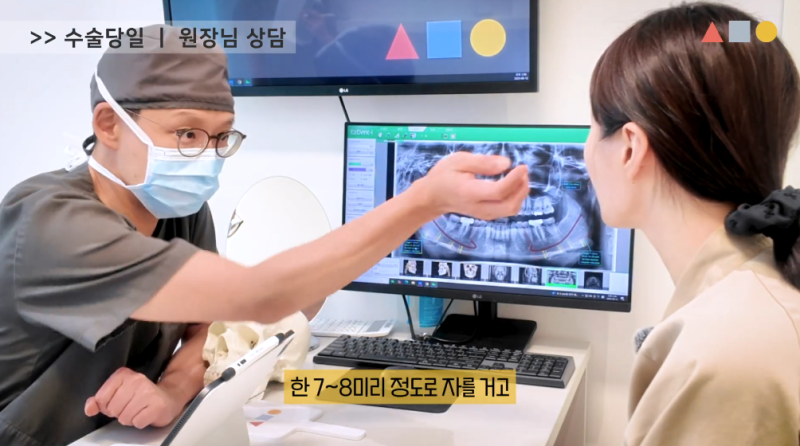
[Medical Team's Customized Surgical Plan]
- Square Jaw: Approximately 7~8mm reduction combined with cortical osteotomy
- Cheekbones: Approximately 5~6mm reduction on each side to maximize the frontal effect
Swelling and Recovery Process by Period After Surgery
What people facing facial contouring surgery are most curious about is undoubtedly the 'swelling' and the timing for 'returning to daily life.'
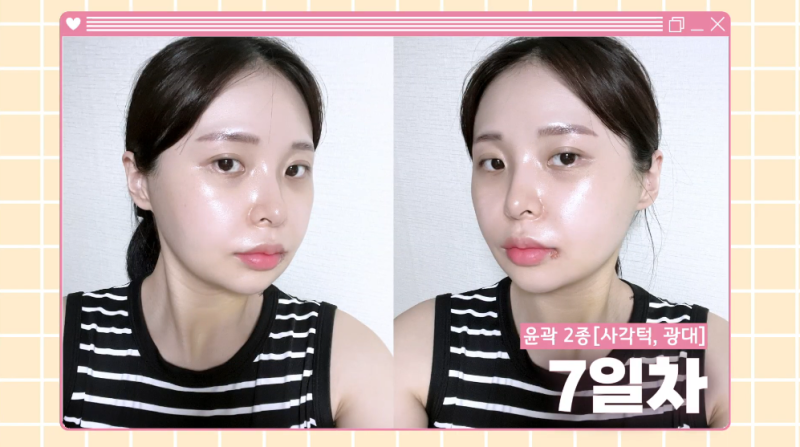
7 Days Post-Op: The Peak of Major Swelling
For about a week after surgery, there is concentrated swelling in the front cheek area. Pain varies by individual but is generally not severe, and it is a period where you may feel a foreign body sensation due to the stitches inside the mouth. Since opening the mouth is restricted, a liquid-based diet is recommended.
1 Month Post-Op: Completion of a Natural Line
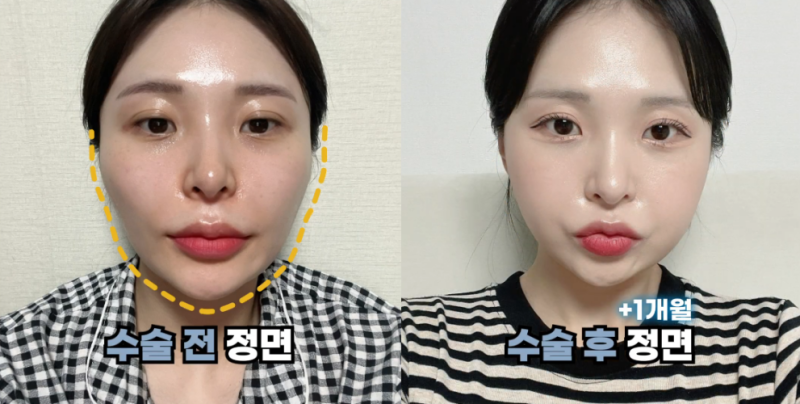
After about a month, the major swelling noticeably subsides, revealing a refined facial line. The patient showed high satisfaction, receiving feedback from those around her that her impression had become much softer. Minor swelling will gradually continue to subside over several months.
Checklist for Safe Facial Contouring Surgery
Since contouring surgery is a highly difficult procedure that deals with bones, it is essential to verify the safety systems of the medical institution.
- Resident Anesthesiologist: You must check if there is a board-certified anesthesiologist who exclusively manages the general anesthesia process.
- CCTV Observation System: Check if the environment allows you to undergo surgery with peace of mind, free from concerns about ghost surgery.
- Aftercare Program: It is necessary to confirm if there is systematic recovery support, such as a 24-hour post-operative care system and swelling management.
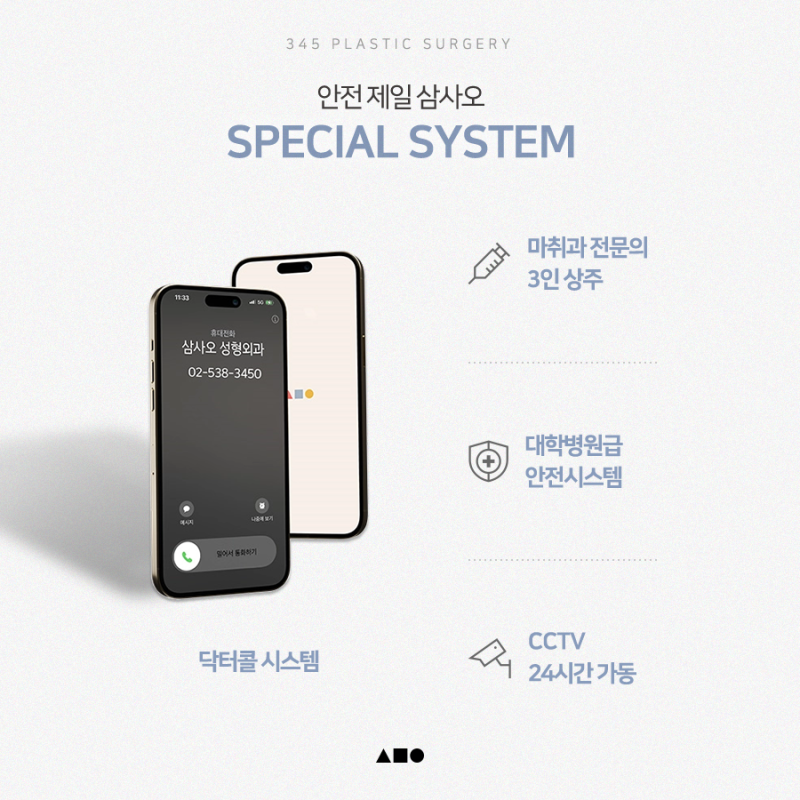
This case was conducted by analyzing the individual anatomical structure of the patient based on 28 years of professional experience. Rather than excessive bone removal, it is important to safely seek changes within a range that harmonizes with your own facial features.
Frequently Asked Questions
What areas are operated on in a 2-point facial contouring surgery?
It primarily corrects the jawline and cheekbones simultaneously. This surgery applies long-curve osteotomy for the jawline, cortical osteotomy, and close-fixation cheekbone reduction to create a smooth and soft facial line, tailored to the individual's facial balance.
When does the major swelling subside after surgery?
Major swelling noticeably subsides approximately 1 month after surgery. For about a week after the operation, swelling is concentrated and peaks in the front cheek area, but by the one-month mark, a more defined facial line emerges, and residual swelling gradually diminishes over several months.
How should I eat immediately after surgery?
In the initial period after surgery, a liquid diet is recommended. Around day 7 post-surgery, there might be a foreign body sensation due to stitches in the mouth and limited mouth opening, so consuming soft, easy-to-chew foods is beneficial for recovery.
What should I check when choosing a hospital for safe surgery?
You must check for the presence of an anesthesiologist and a CCTV observation system. It is important to verify if there is a specialist dedicated to general anesthesia, if CCTV is available to alleviate concerns about ghost surgery, and if there is a systematic post-operative care program, including swelling management.