2026-06-04
Effects and Precautions of 2-Type Facial Contouring: Perfecting the Facial Line with Zygoma Reduction and Square Jaw Surgery
Learn about 2-type facial contouring, which combines zygoma reduction to decrease facial width and square jaw surgery to refine an angular lower face. We provide a detailed expert overview, from 1:1 customized design through 3D-CT analysis and safe surgical procedures to recovery precautions.

The Core of a Three-Dimensional Facial Line: What is 2-Type Facial Contouring?
Many people worry about protruding cheekbones (Zygoma) and an angular jawline when looking in the mirror or taking photos. Especially if the face looks wide from the front and lacks dimension from the side, a precise approach beyond simply shaving the bone is required. 2-Type Facial Contouring is a complex plastic surgery that combines zygoma reduction and square jaw surgery to reduce the horizontal width of the face and achieve a smooth V-line.
Who Needs 2-Type Facial Contouring?
- Those with a strong impression due to protruding cheekbones
- Those with a wide lower face due to an angular and developed jawbone below the ears
- Those who want to improve their facial size from both the front and side profiles
- Those who want a softer impression by smoothing out an uneven facial line
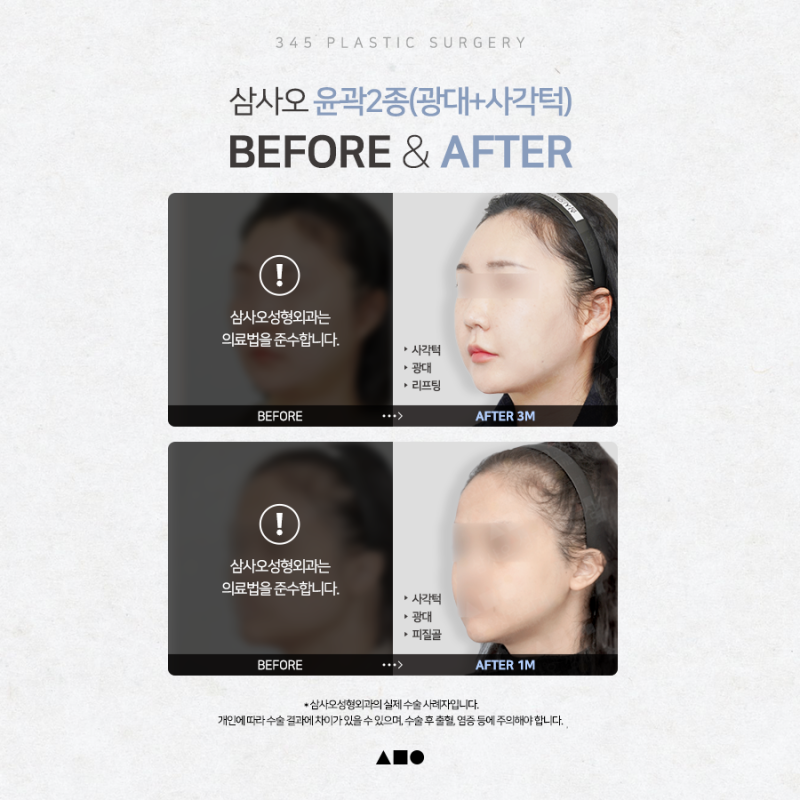
Softening Protruding Cheekbones: The Principle of Zygoma Reduction
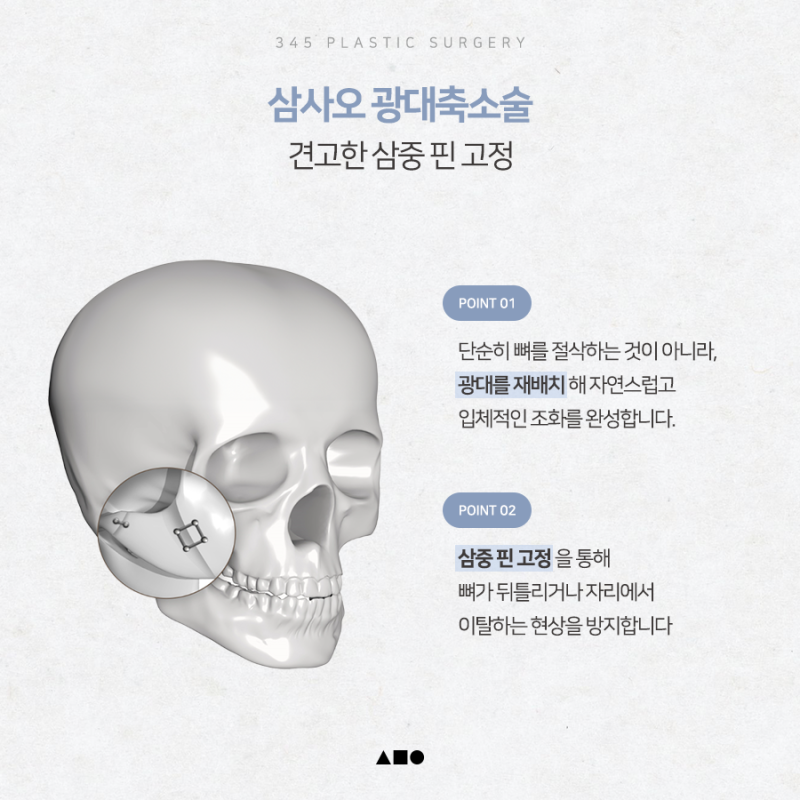
Zygoma reduction is not simply a surgery that shaves down the bone. The core of the procedure involves fracturing the excessively protruding cheekbone, moving it inward, and repositioning it. What is just as important as moving the bone is securing it firmly in place.
At 345 Plastic Surgery, we use a triple fixation method to prevent the bones from separating or sagging, aiding in a stable recovery. Through this, you can expect a three-dimensional change where the protruding side cheekbones are reduced and the frontal width of the face becomes narrower.

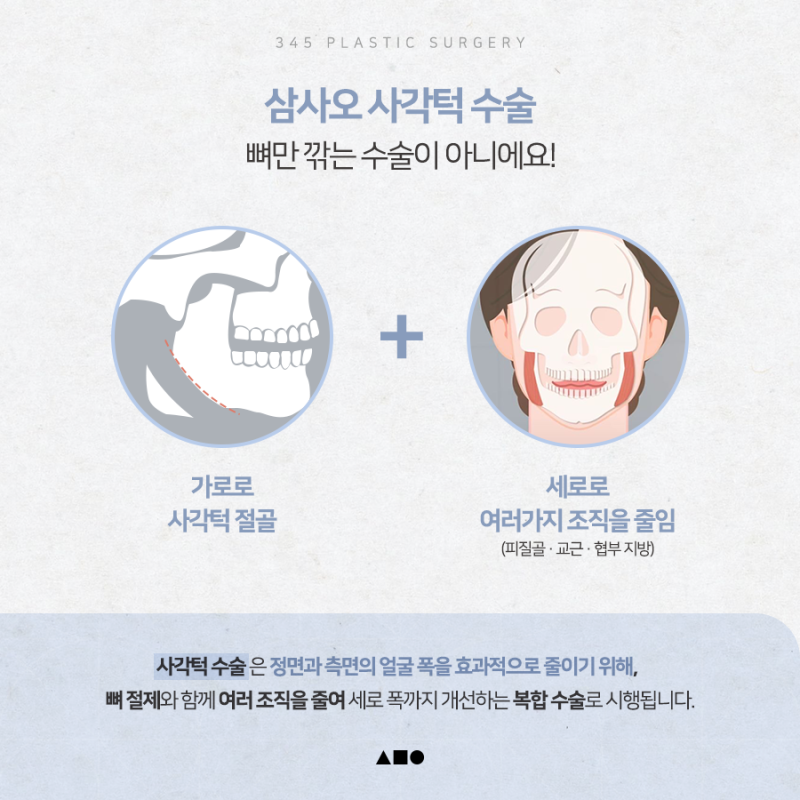
Slimming an Angular Lower Face: Key Points of Square Jaw Surgery
Square jaw surgery is the process of refining the line from below the ear to the front chin into a smooth curve. Rather than simply resecting the angular bone, the frontal effect can be further maximized when combined with cortical bone (outer layer of the bone) resection, masseter (chewing muscle) reduction, and buccal fat removal depending on the individual's condition.
Above all, creating a smooth line without the 'staircase effect' (where the resected area forms a step-like ridge) is a crucial factor that determines the surgeon's skill level.
3D-CT Precision Diagnosis and Custom Design for Safe Results
For facial contouring surgery, it is essential to accurately identify the location of the mandibular nerve. Using 3D-CT, we must analyze the bone thickness, density, and the pathway of the nerves from multiple angles to establish a safe resection range. Based on this precise data, our skilled medical team with over 27 years of clinical experience applies a 1:1 customized design to perform surgery that considers the harmony of the entire face.
Guide to Post-Operative Recovery and Side Effect Prevention
For contouring surgery, aftercare is just as important as the surgery itself. In the early stages of surgery, cold compresses and light walks are recommended to manage edema (swelling). Since the surgery is performed through intraoral incisions, thorough hygiene management using mouthwash is essential.
- Diet: For about a week after surgery, you should consume soft liquid foods such as gruel or porridge.
- Activity: Avoiding strenuous exercise or saunas for about a month helps ensure a good recovery.
- Precautions: There may be concerns about temporary sensory loss or asymmetry, but it is important to carefully check your recovery status through regular check-ups.

345 Plastic Surgery systematically manages the entire process, from precise pre-operative diagnosis to post-operative recovery care, providing an environment where patients can receive treatment with peace of mind.
Frequently Asked Questions
What kind of surgery is facial contouring 2-piece surgery?
Yes, facial contouring 2-piece surgery is a complex plastic surgery that combines cheekbone reduction and square jaw surgery. It helps to reduce the horizontal width of the face and create a smooth V-line by refining prominent cheekbones and angular jawbones below the ears.
Can sagging cheeks be prevented after cheekbone reduction surgery?
Yes, it can be prevented through firm fixation. After osteotomy and inward repositioning of the bone, using a triple fixation method can prevent the bone from spreading or sagging, and ensure stable recovery.
What is the method to enhance the frontal effect during square jaw surgery?
Yes, in addition to bone resection, additional procedures can be performed to enhance the frontal effect. Depending on the individual's condition, combining cortical bone resection, masseter muscle reduction (the chewing muscle), and deep buccal fat removal can create an even slimmer line.
Why is a 3D-CT scan necessary before facial contouring surgery?
Yes, it is essential to accurately identify the location of nerve lines for safe surgery. Utilizing 3D-CT allows for multi-angle analysis of bone thickness, density, and nerve pathways to establish a safe resection range.
How should I eat after facial contouring surgery?
For about one week after surgery, you should consume soft liquid foods such as gruel or porridge. Since the surgery is performed through an intraoral incision, thorough oral hygiene management with gargling after meals is important for recovery.