2026-06-04
Do You Really Need to Cut Retaining Ligaments During a Lifting Surgery? We'll Tell You for Sure!
Learn why retaining ligaments are crucial in lifting surgery and how their careful release can significantly impact the outcome, ensuring a more effective and lasting lift.
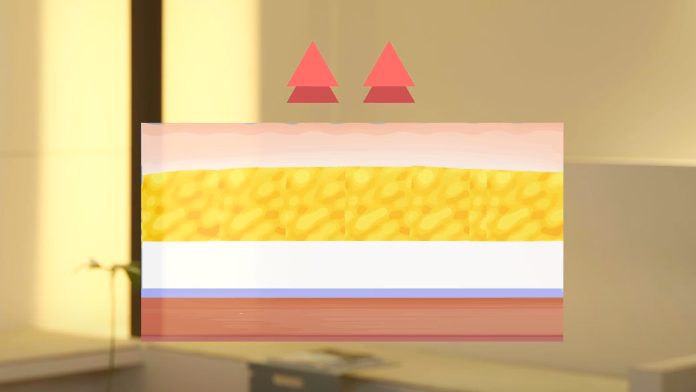
Do You Really Need to Cut Retaining Ligaments During a Lifting Surgery? We'll Tell You for Sure!
Hello. This is 345 Plastic Surgery.
With ongoing interest in lifting surgery,
many of you likely have questions.
Among them, a common question we receive is about
‘retaining ligaments’, which play a
crucial role in the lifting process.
Since the way retaining ligaments are handled
can affect the outcome of the surgery,
today we'll explore how the dissection of retaining ligaments
impacts surgical results.

Q. When performing a lift,
do you absolutely have to cut the retaining ligaments?
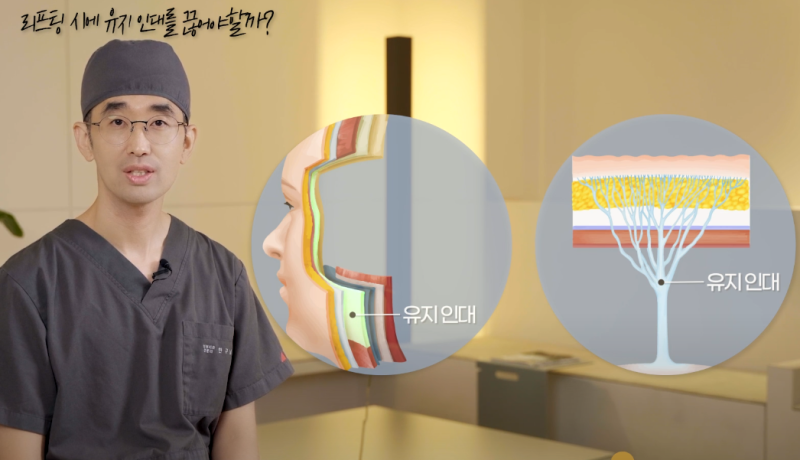
Retaining ligaments are one of the structures in the face.
They are important structures that act like the pillars of a building,
holding the facial tissues
to prevent them from sagging downwards.

While the primary role of retaining ligaments is to
hold tissues in place to prevent sagging,
conversely, when we try to lift sagging tissues,
they can sometimes hinder the force from being transmitted downwards
in that area, or
obstruct the smooth upward movement.
Therefore, cutting the retaining ligaments is often
more effective during lifting surgery.
Q. If retaining ligaments are cut,
will there be changes to the face?
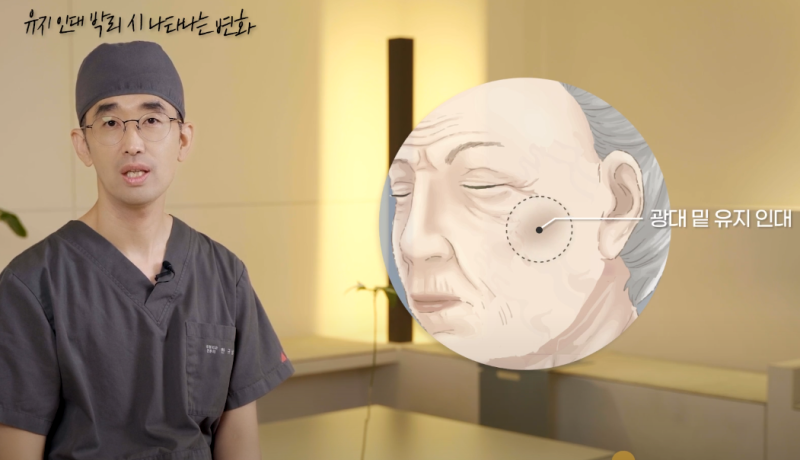
Often, the location of retaining ligaments
can be visible on the surface of the face.
The slightly indented area, as if you've pressed your finger below the cheekbone,
is what's called the malar retaining ligament.
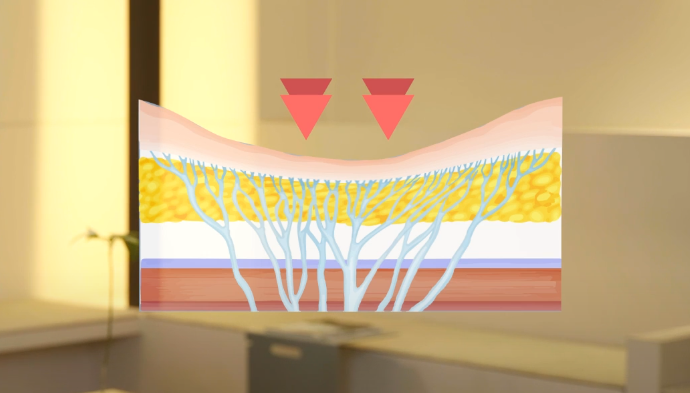
This area may appear indented from the start,
but usually, when retaining ligaments hold the skin,
if the skin sags downwards,
it can appear indented as if pressed in,
because it's pulled inwards by the relatively less stretched retaining ligaments.
Therefore, after cutting the retaining ligaments
and pulling them properly, the force is transmitted downwards
to the area held by the lower retaining ligaments,
so dissection of the retaining ligaments is essential.
Q. If retaining ligaments are damaged,
can they be reconstructed?


Since the main role of retaining ligaments is to
prevent skin sagging,
there has been a debate among surgeons performing lifting procedures
about whether retaining ligaments should be
reconstructed after surgery.
Practically speaking, reconstructing the retaining ligament tissue itself
is not easy, we can tell you.

However, after dissecting the retaining ligaments through surgery,
adhesions form overall,
which can partially serve a similar role
to retaining ligaments.
In conclusion, reconstructing the retaining ligaments themselves
is indeed not easy.
Q. Can lifting be done without cutting
the retaining ligaments?

In fact, it's an immutable law that everyone agrees
cutting retaining ligaments is important.
However, whether retaining ligaments are cut or not
is not the only factor influencing the surgical outcome.
The purpose of cutting retaining ligaments is
to transmit force far down to the lower part of the face
through dissection and lifting.

If only the retaining ligaments are slightly cut and pulled
without extensive dissection,
it cannot be considered to have a better effect.
Ultimately, in lifting, the dissection and cutting of retaining ligaments
are greatly influenced by the extent of the dissection,
and to achieve extensive dissection,
the incision length must naturally be longer.

Therefore, when the incision is longer, the dissection range is wider,
and sufficient lifting can be achieved down to the lower areas,
cutting the retaining ligaments that hinder lifting elasticity
can be said to be an important process.
In conclusion, for simpler surgeries with relatively small
dissection and incision ranges,
whether the retaining ligaments are cut or not
does not make a significant difference in the outcome.
Retaining ligaments, as the name suggests, play a crucial role
in preventing tissue sagging in our face.
Conversely, during a lift, they also act as an obstruction.
There are many types of retaining ligaments.
However, it is very important to appropriately cut only the necessary ones.
Furthermore, just as important as retaining ligament dissection are
the length of the incision, the extent of dissection, and the method of fascia treatment.
Therefore, we recommend considering various conditions when deciding on surgery.
If you have any questions about lifting surgery
beyond the ones answered today,
please inquire via the banner below 😃
We will provide detailed consultation 💭



Frequently Asked Questions
Is it necessary to cut the retaining ligaments during a facelift?
Yes, it is often recommended for a good lifting effect. Proper dissection of the retaining ligaments ensures that force is effectively transmitted when pulling up the sagging skin and SMAS layer, and it can prevent dimpling in specific areas.
Are the cut retaining ligaments reconnected after surgery?
No, it is realistically difficult to perfectly reconstruct the delicate ligament tissue to its pre-surgical state. However, the adhesions that naturally occur during the post-surgical recovery process act as a support similar to the original retaining ligaments, stably fixing the tissue.
Is retaining ligament dissection essential even for a mini-facelift?
No. In mini-facelifts or simpler procedures with smaller dissection areas and incisions, the presence or absence of retaining ligament dissection has a relatively minor impact on the results. However, if you desire a definite facelift effect, extensive dissection and retaining ligament management are important.
What should be considered during retaining ligament dissection surgery?
It is crucial to have the surgery performed by a specialist with extensive anatomical knowledge. Precise dissection is essential because numerous nerves and blood vessels run through the face, and a safe plan must be established by comprehensively considering the incision length and the method of SMAS layer treatment.