2026-06-04
Preventing Pixie Ears and Sideburn Changes After Facelift Surgery: A Guide to Flawless Lifting
This post provides a detailed explanation of the medical causes and prevention methods for the 'pixie ear' phenomenon and sideburn displacement that can occur after facelift surgery. We provide accurate information to reduce concerns about side effects by highlighting the importance of skin tension control and incision design during lifting surgery.
Basic Principles and Expected Effects of Facelift Surgery
Facelift surgery is a lifting procedure that restores elasticity by repositioning facial tissues that have sagged due to aging back to their original positions. The key is not simply pulling the outer skin, but meticulously lifting and securing the superficial musculoaponeurotic system (SMAS) layer beneath the skin.
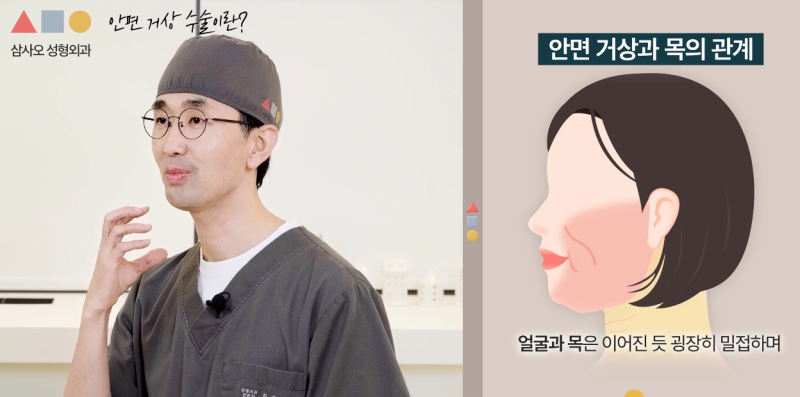
The face and neck are anatomically closely connected. Therefore, upwardly repositioning facial tissues through a facelift can also be expected to improve sagging in the neck area to some extent. However, if neck sagging is severe, combining the procedure with a neck lift will help achieve better results.
Causes and Mechanisms of Pixie Ears After a Facelift
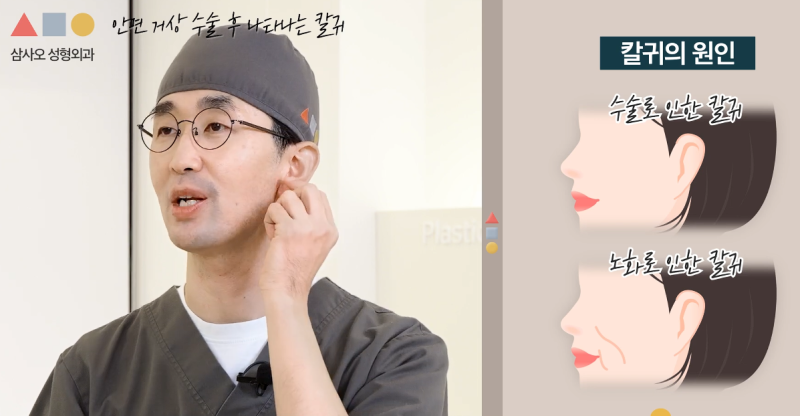
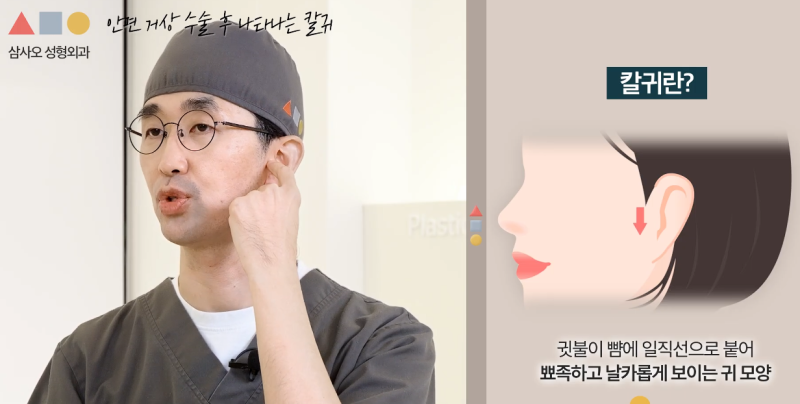
A 'pixie ear' refers to a shape where the earlobe is elongated downward, appearing as if it is directly attached to the cheek. While this can be a congenital shape present before surgery, it can also be caused by artificial tension after facelift surgery.
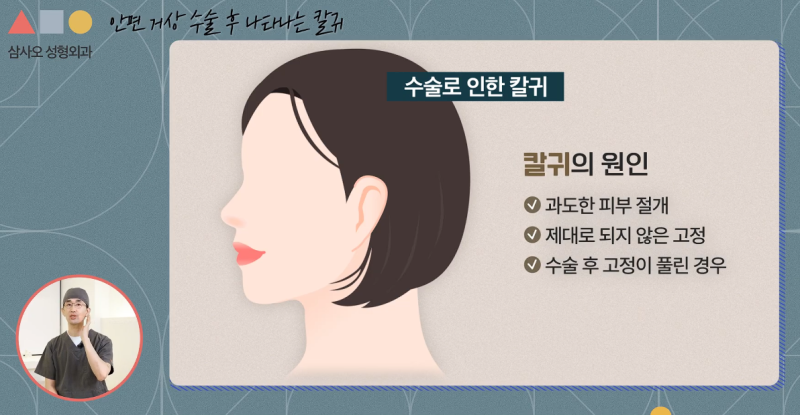
The main causes of pixie ears occurring after surgery are as follows:
- Excessive skin excision: If too much skin is removed to improve the lower jawline, strong tension occurs at the suture site.
- Insufficient fixation: If the internal tissues are not properly secured, the skin pulled upward cannot withstand the downward force and ends up pulling the earlobe down.
- Weakened tissue retention: Even if the fixation was successful immediately after surgery, the fixation may loosen over time, or the skin may sag again, resulting in a pixie ear shape.
Can Already Formed Pixie Ears Be Corrected With Revision Surgery?
When a pixie ear occurs, it is easy to think that simply lifting the earlobe slightly and suturing it again will fix the issue. However, because the fundamental cause lies in the downward pulling force of the entire skin, the correction process requires a more meticulous approach than one might expect.
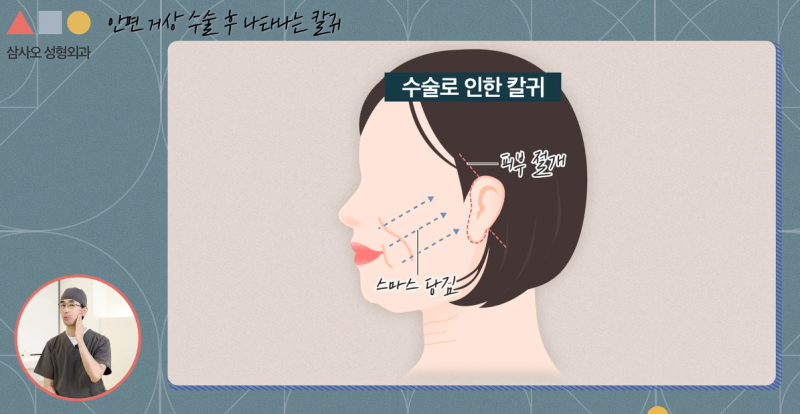
For correction, revision surgery that repositions the entire pulled tissue upward is often recommended. If a full revision surgery is too burdensome and only limited correction around the earlobe is performed, noticeable scarring may remain around the ear. Therefore, it is important to consult with an experienced medical professional to find an appropriate compromise between minimizing scars and achieving a definitive corrective effect.
Preventing Missing Sideburns: Incision Design is Key
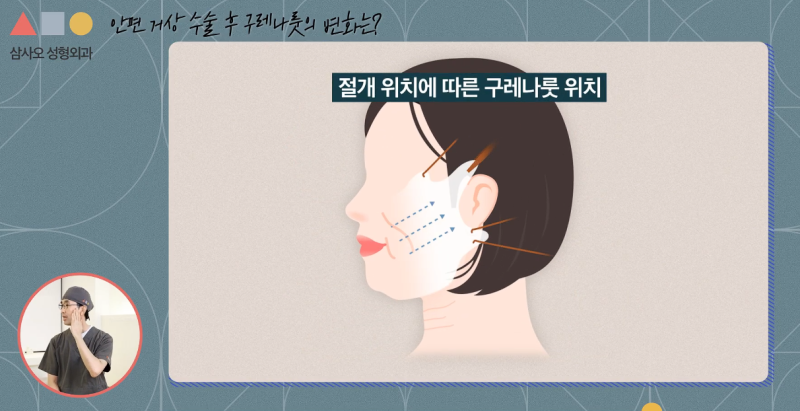
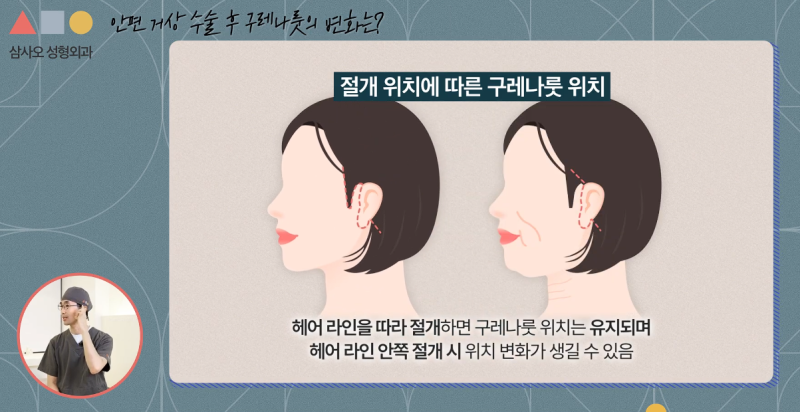
Another common concern during a facelift is the change in the position of the sideburns. Because the skin is pulled upward and outward, the sideburns may appear pushed back or shifted upward depending on the incision location.
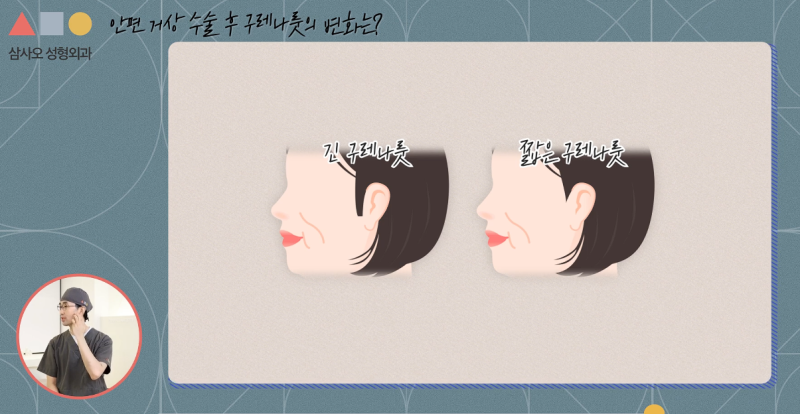
- Incision inside the hairline: This is advantageous for hiding scars, but there is a possibility that the sideburns will move upward, becoming shorter or looking unnatural in position.
- Incision at the hairline boundary: This is advantageous for preserving the original position of the sideburns. Although a fine scar may remain at the boundary, it can be sufficiently mitigated with skilled suturing techniques.
In conclusion, facelift surgery is not simply the act of pulling the skin. A meticulous design and fixation method that analyzes the individual's anatomical structure to reduce the possibility of side effects, such as pixie ears and sideburn displacement, are essential.
Frequently Asked Questions
What is the principle behind a facelift surgery?
Facelift surgery is a lifting procedure that restores elasticity by repositioning facial tissues that have sagged due to aging. The key is not just to pull the skin, but to meticulously lift and fix the underlying SMAS layer.
Can a facelift surgery improve neck sagging?
Yes, it can be improved to some extent. The face and neck are anatomically connected, so repositioning facial tissues upwards can also improve sagging in the neck area. However, if neck sagging is severe, combining it with a neck lift can help achieve better results.
What are the main causes of 'pixie ear' after a facelift?
Pixie ear can occur due to excessive skin excision, insufficient internal tissue fixation, or weakening of tissue support over time. These causes lead to the earlobe being pulled downwards and appearing attached to the cheek.
Can 'pixie ear' that occurred after a facelift be corrected with revision surgery?
Yes, it can be corrected with revision surgery. The fundamental cause of pixie ear is the downward pulling force on the entire skin, so revision surgery to reposition the entire pulled tissue upwards is recommended. It is important to consult with experienced medical staff to find ways to minimize scarring.
What is the method to prevent changes in sideburn position during a facelift?
Changes in sideburn position depend on the incision design. An incision along the hairline boundary is advantageous for preserving the original position of the sideburns, and skilled suturing techniques can alleviate subtle scars. An incision inside the hair may cause the sideburns to move upwards.