2026-06-04
Facelift Anesthesia Selection Guide: Differences and Safety of Sedation vs. General Anesthesia
For those considering anesthesia options before a facelift, we provide an in-depth analysis of the differences between sedation and general anesthesia. Our expert editors summarize the pros and cons of each method, differences in breathing, and the importance of having an in-house anesthesiologist for a safe surgery.

Facelift Anesthesia: Which Method is More Suitable?
During facelift consultations, one of the most common concerns and questions from patients is about 'anesthesia.' This is due to the fear of pain during the surgical process or concerns about the safety of the anesthesia itself. Most facelifts are performed under sedation, but depending on the situation, general anesthesia may also be considered.
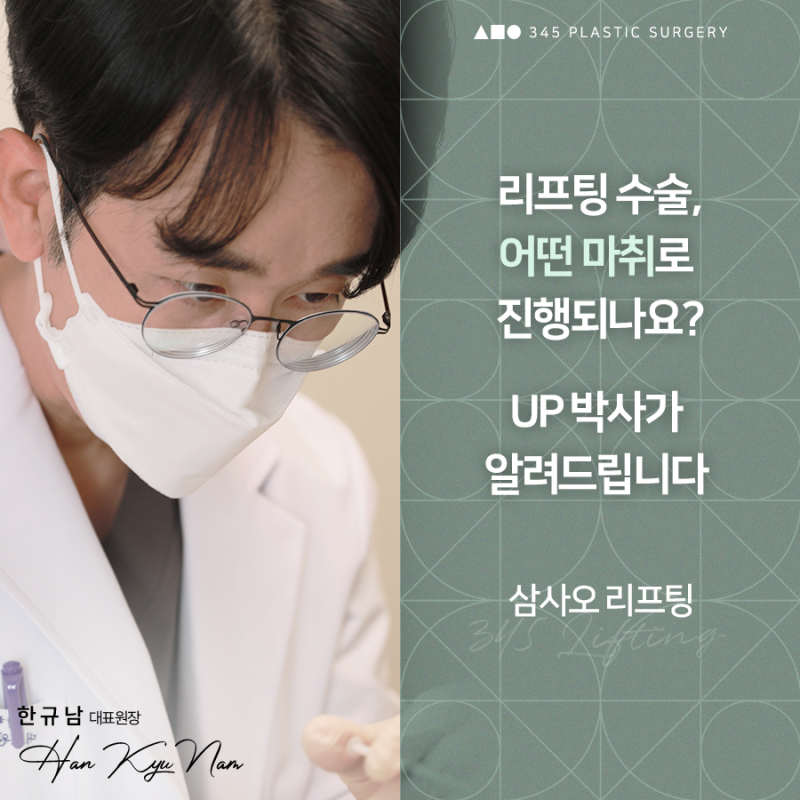
The Crucial Differences Between Sedation and General Anesthesia
The biggest difference between the two anesthesia methods lies in 'who is responsible for breathing.' Understanding the characteristics of each can help reduce vague fears.
| Category | Sedation | General Anesthesia |
|---|---|---|
| Breathing Method | Maintains spontaneous breathing (breathes on their own) | Mechanical ventilation via intubation |
| Patient State | Unconscious but can respond to external stimuli | Consciousness, pain, and movement are completely blocked |
| Primary Use | General facelifts and lifting procedures | Prolonged surgeries lasting over 5 hours |
| Recovery Speed | Relatively fast | Requires more recovery time (e.g., expelling anesthetic gas) |

Criteria for Choosing Anesthesia Based on Surgery Time and Health Status
Generally, a facelift can be performed safely enough under sedation. However, there are specific situations where the medical team may recommend general anesthesia.
1. When the Expected Surgery Time is Long
This is when a facelift is combined with other complex surgeries, and an operative time of over 5 hours is expected. Even under sedation, the human body can make unconscious movements. Since precise dissection is required during lifting surgeries, such movements can be a risk factor, leading to the choice of general anesthesia.
2. Patient's Underlying Conditions and Psychological Factors
In cases of advanced age or cardiopulmonary diseases such as impaired lung function, sedation—which maintains spontaneous breathing—may actually place less physical burden on the body than general anesthesia. On the other hand, for a young and healthy patient with an extreme fear of waking up during sedation, general anesthesia may be considered after thorough consultation.
The Core of Anesthesia Safety: An In-House Anesthesiologist
What is more important than the anesthesia method itself is 'who manages the anesthesia.' The medications used for sedation are very safe when an anesthesiologist controls the appropriate dosage, but risks can arise if there are no specialized medical personnel present to respond immediately to unexpected situations.
- Real-time Monitoring: General anesthesia requires managing blood pressure, pulse, and blood oxygen levels on a second-by-second basis.
- Emergency Response Capability: In the event of a constitutional reaction or an unexpected situation, immediate intervention by an anesthesiologist protects the patient's life.
- Customized Patient Control: The medication dosage is finely adjusted according to the individual's metabolic rate to minimize side effects.

If you are planning a facelift, you must check whether the clinic has a system with an in-house board-certified anesthesiologist. Safe anesthesia is the most fundamental foundation for successful lifting results.

Frequently Asked Questions
What type of anesthesia is mainly used for a facelift?
Facelift surgery is mostly performed under sedation anesthesia. However, general anesthesia may be considered depending on the estimated long duration of the surgery or the patient's specific health condition.
What is the biggest difference between sedation anesthesia and general anesthesia?
The biggest difference is 'who is responsible for breathing'. With sedation anesthesia, the patient maintains spontaneous breathing, while with general anesthesia, mechanical ventilation is used through intubation.
Are there special cases where general anesthesia should be considered?
Yes, there are. General anesthesia may be considered for long surgeries expected to last more than 5 hours, such as a facelift combined with other procedures, or for patients who have an extreme fear of waking up during sedation.
What should I check when choosing a hospital for anesthesia safety?
The most important thing to check for anesthesia safety is whether an anesthesiologist is present. A specialist ensures patient safety through real-time monitoring and emergency response capabilities.
Why is it important for an anesthesiologist to be present?
An anesthesiologist ensures the safety of anesthesia and minimizes side effects by controlling anesthetic drugs, real-time monitoring, immediate treatment in case of emergencies, and customizing drug dosages for each patient.