2026-06-04
Considering Customized Rhinoplasty? Advantages of 3D Custom Implants and Before & After Process | 345 Plastic Surgery
Discover how to find the nose line that best suits your face with 3D custom implant rhinoplasty. Instead of uniform implants, we detail the features of the Custom FIT method—which precisely analyzes individual nasal bone structures using 3D-CT to create the implant—along with the post-operative recovery process and precautions.

A Line Perfectly Tailored to Your Face: What is Customized Rhinoplasty?
The biggest concerns for many considering rhinoplasty are, "Will it really suit my face?" or "Will the implant look too obvious?" While rhinoplasty in the past focused simply on raising the nasal bridge, the recent trend has shifted toward 'customized design' that reflects the harmony of the entire face and individual skeletal structure.
Custom FIT Rhinoplasty at 345 Plastic Surgery is performed by analyzing each patient's actual nose shape and bone curvature to individually manufacture the implant. Compared to carving and fitting ready-made implants, it offers higher adhesion and matches your own nasal bone structure, providing the advantage of a more natural-looking line.
3D Custom Implants vs. Standard Implants: What is the Difference?
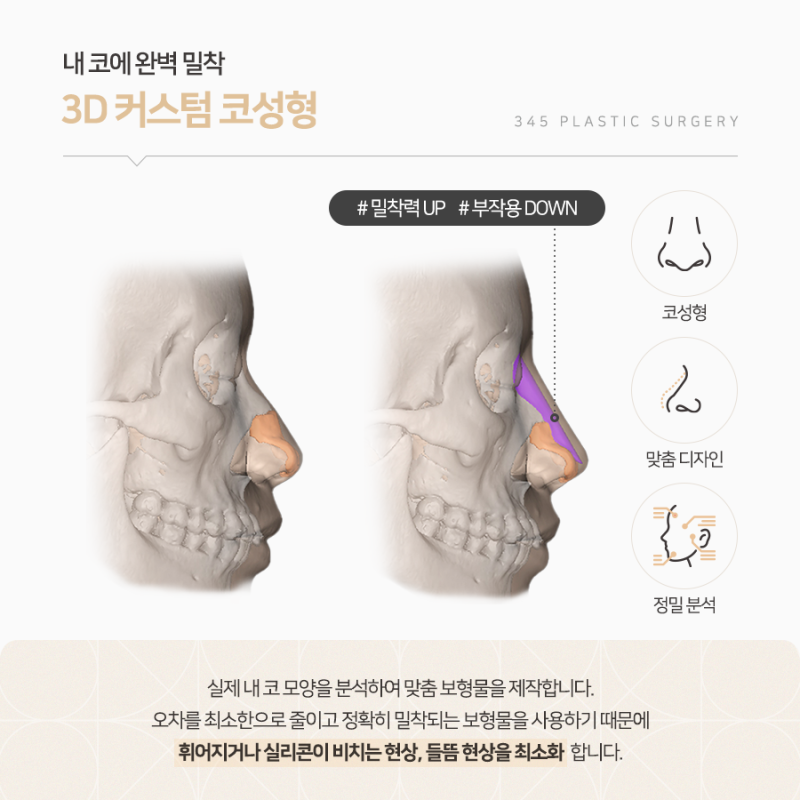
Standard implants are manufactured in standardized shapes, making it difficult to perfectly reflect the varying nasal bone curvatures and asymmetries of each individual. Because of this, there can be concerns about the implant shifting, lifting, or changing position over time.
On the other hand, 3D custom implants are manufactured by three-dimensionally analyzing the internal structure of the nose based on 3D-CT imaging data.
- High Adhesion: Minimizes the gap between the nasal bone and the implant, reducing shifting or lifting.
- Personalized Design: The line extending from the glabella (between the eyebrows) to the nasal tip can be meticulously designed according to the patient's desired direction.
- Reduced Risk of Side Effects: Relatively lowers the burden of implant visibility or a foreign body sensation.
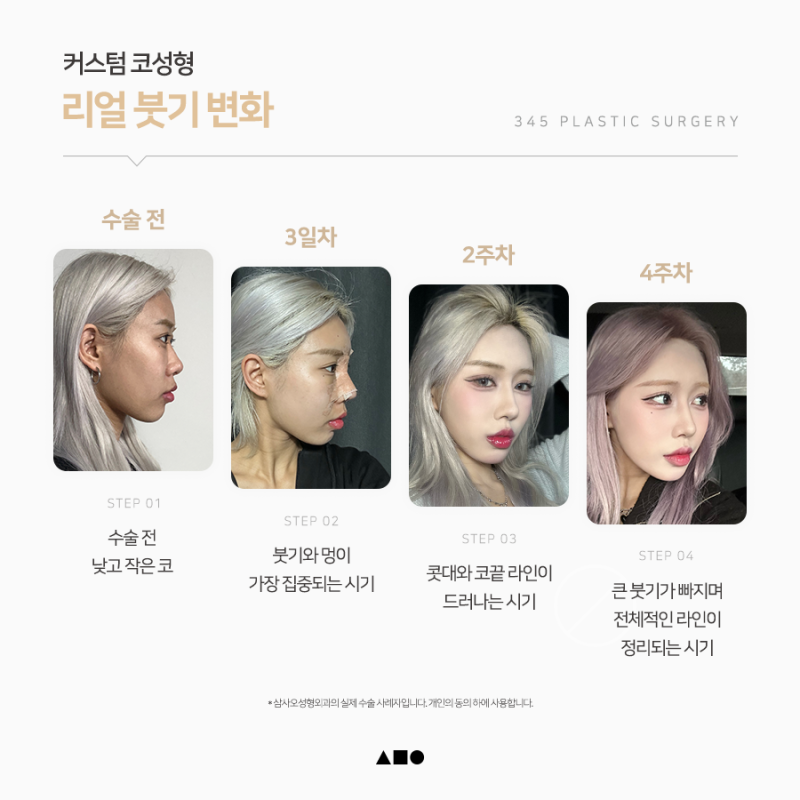
Candidates for Customized Rhinoplasty and the Surgical Process
Customized implants not only increase aesthetic satisfaction but can also be a suitable alternative for those with complex nasal structures.
- Hump Nose: When it is difficult to achieve a smooth line with a standard implant due to the curvature of the nasal bridge.
- Low Glabella: When the area between the eyebrows is low and requires a natural line connection.
- Asymmetrical Nasal Bone: When it is challenging to achieve symmetry due to differences in the height or shape of the left and right nasal bones.
- Considering Revision Surgery: When seeking improvement after experiencing implant migration or visibility from a previous surgery.
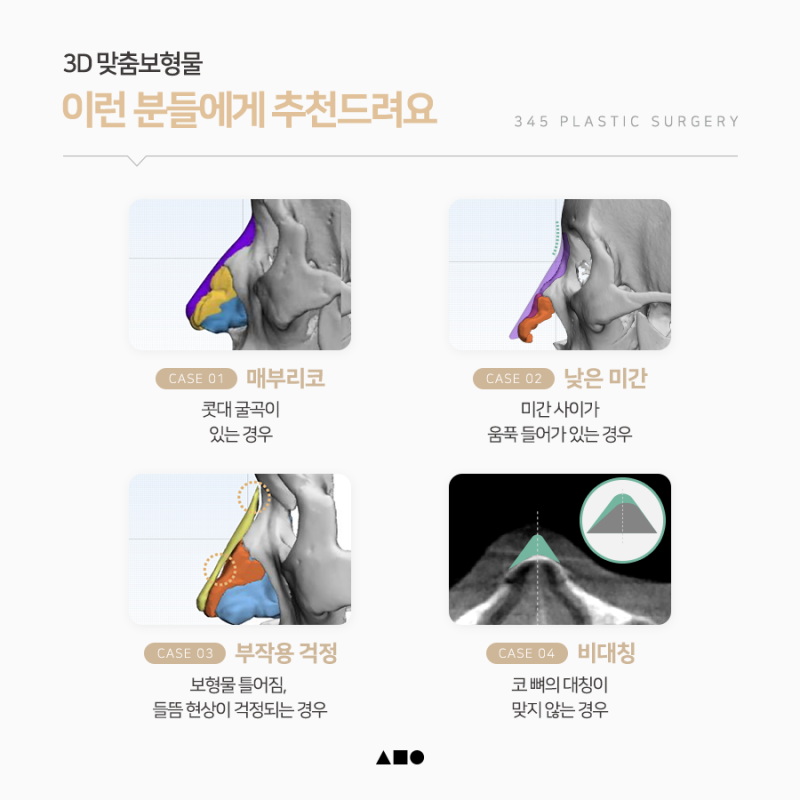
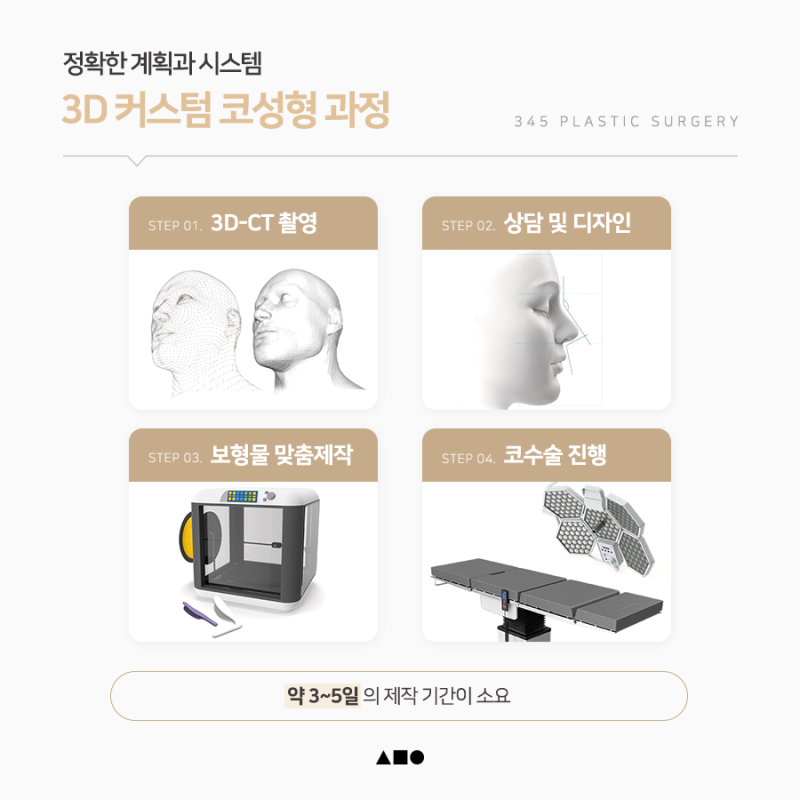
At 345 Plastic Surgery, we first perform a 3D-CT scan for precise analysis and finalize the design through an in-depth consultation with our medical staff. The implant manufacturing requires a sophisticated process that takes about 3 to 5 days, after which the surgery is performed using the dedicated custom implant.
Swelling Changes and Recovery Period Management After Rhinoplasty
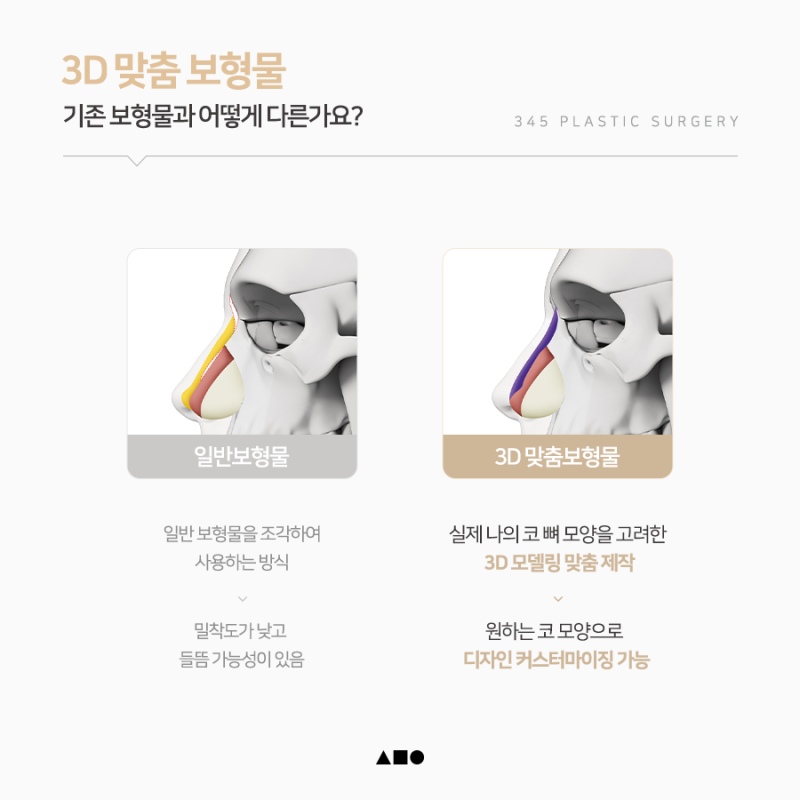
The recovery process after rhinoplasty varies by individual, but the general timeline is as follows. Swelling and bruising are most prominent immediately after surgery, and stitches and splints are removed at the 1-week mark.
By the second week, major swelling subsides, and the overall contour of the nasal bridge and tip begins to emerge. Minor swelling gradually resolves over several months. Strictly following the precautions provided by the medical staff during this period is highly beneficial for a smooth recovery.
Checking Before and After Results for Natural Changes
The core of rhinoplasty using custom implants is 'naturalness without exaggeration.' The most satisfying results are achieved when the design considers the angle of the lips and philtrum, as well as the connecting line with the forehead, rather than unconditionally raising the nose without considering facial proportions.
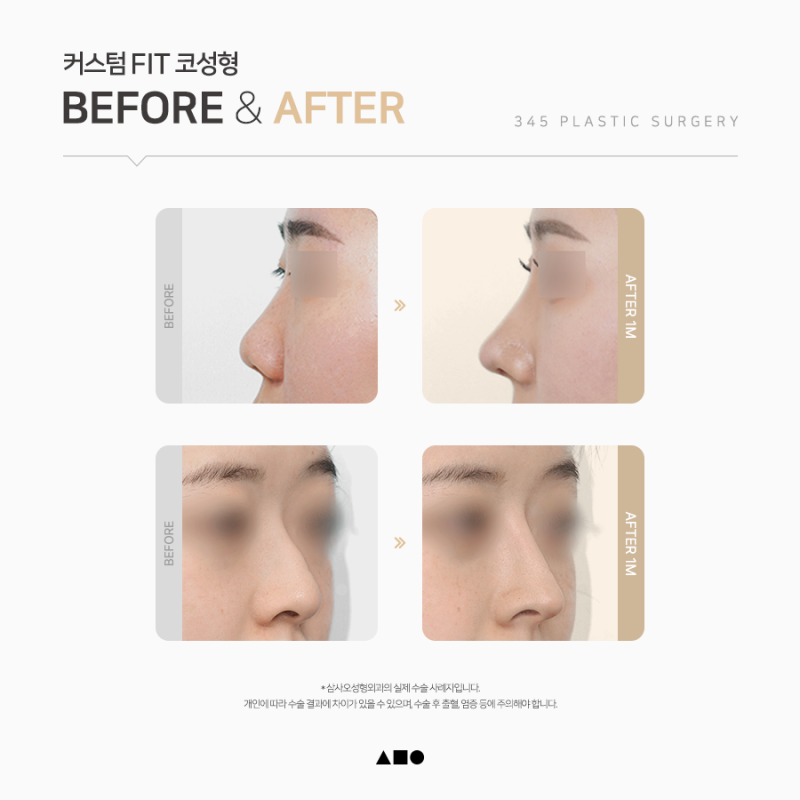
As seen in the before and after photos, custom implants create a smoothly connected line down to the nasal tip, refining the overall impression to be much more sophisticated. Since the nose is the center of the face, please consult thoroughly with experienced medical professionals to choose the method that best suits you.


Frequently Asked Questions
What is the difference between 3D custom implants and standard implants?
The biggest difference is that 3D custom implants are individually manufactured based on 3D-CT data to fit the patient's internal nasal structure. Unlike off-the-shelf implants, they minimize gaps between the nasal bone and the implant, reducing wobbling or lifting and lowering the risk of side effects.
How long does it take to produce custom nose surgery implants?
Implant production takes approximately 3 to 5 days. After precisely analyzing the nasal structure through 3D-CT imaging and confirming the design through in-depth consultation with medical staff, a patient-specific implant is completed through a meticulous process.
Is custom nose surgery possible for a hooked nose or an asymmetrical nose?
Yes, it is possible. For those with a hooked nose with a curved bridge or an asymmetrical nasal bone with different left and right heights, it is difficult to achieve a smooth line with standard implants, so 3D custom implants tailored to the individual's bone structure can be a very suitable alternative.
What is the recovery period and swelling like after nose surgery?
Typically, major swelling subsides and the overall contour becomes visible by the second week after surgery. Swelling and bruising are most severe immediately after surgery, and stitches and splints are removed at the one-week mark. Residual swelling gradually subsides over several months, requiring consistent care.