2026-06-04
How to Choose the Best Facelift Clinic? SMAS Dissection and 4-Layer Lifting Effects
Facelift surgery fundamentally improves deep facial wrinkles and sagging skin elasticity. We explain the principles of 4-layer lifting—which pulls not just the skin, but also the SMAS layer and retaining ligaments—and the importance of delicate dissection techniques. Discover the criteria for choosing a clinic to resolve your aging wrinkle concerns and achieve safe surgical results.

Aging Wrinkles and Loss of Elasticity: Why You Need a Facelift
While it is natural for skin wrinkles to increase and elasticity to decrease as time passes, deepening nasolabial folds and a sagging jawline can become major concerns every time you look in the mirror. If simple laser treatments or thread lifting have not provided satisfactory improvements, you may want to consider a more fundamental approach: a facelift.
A facelift aims to reposition soft tissues that have sagged due to aging back to their original positions, restoring the vibrant face you had 10 years ago. In particular, a facelift can be an effective alternative if you have the following concerns:
- Sagging cheeks causing jowls and a collapsed jawline
- Concerns about deep-set wrinkles, not just fine lines
- Desire for a lifting surgery with long-lasting and distinct results
- Dissatisfaction with the results of previous lifting procedures

The Principles of 4-Layer Facelift: Differentiated from Simple Lifting
When choosing the best facelift clinic, a crucial point to check is 'how deep they pull.' If only the skin surface is pulled, the maintenance period is short, and unnatural results such as 'pixie ears' can occur.
345's FULL Facelift pulls and fixates in 4 layers: the epidermis, the SMAS layer (subcutaneous fascial layer), the retaining ligaments, and the temporal fascia. By correcting the root cause of aging from deep within the skin, you can expect a much more refined improvement.
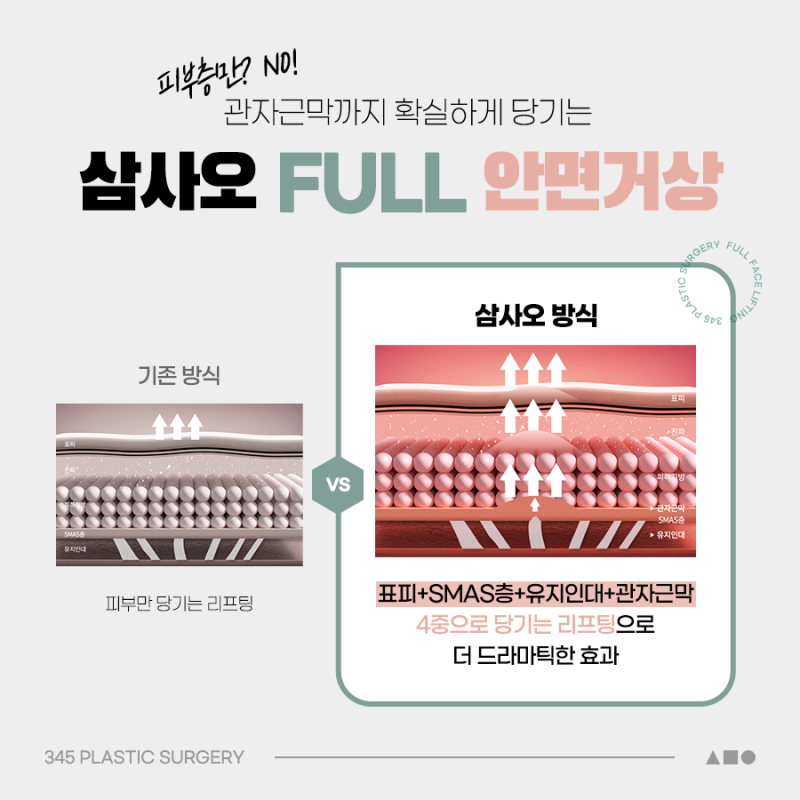
The Core of Longevity: Delicate Dissection Techniques
The success of a facelift depends on the dissection process. Dissection refers to the separation of skin tissue from the muscle layer. To effectively pull the SMAS layer, the surrounding tissues must be precisely separated. Only when this process is performed correctly can you maintain smooth lifting results for a long time without the skin becoming bumpy.

Furthermore, since skin thickness and the degree of aging vary for each patient, clinical experience in setting a customized dissection range is of utmost importance.
Micro-Incision and Suturing Know-How to Reduce Scar Concerns
As it is an incisional surgery, concerns about scarring are inevitable. A top facelift clinic makes micro-incisions along the ear line in inconspicuous areas and applies meticulous suturing techniques so that scars are barely visible during postoperative recovery. This is 345's unique technical expertise, considering not only the immediate postoperative appearance but also long-term aesthetic satisfaction.
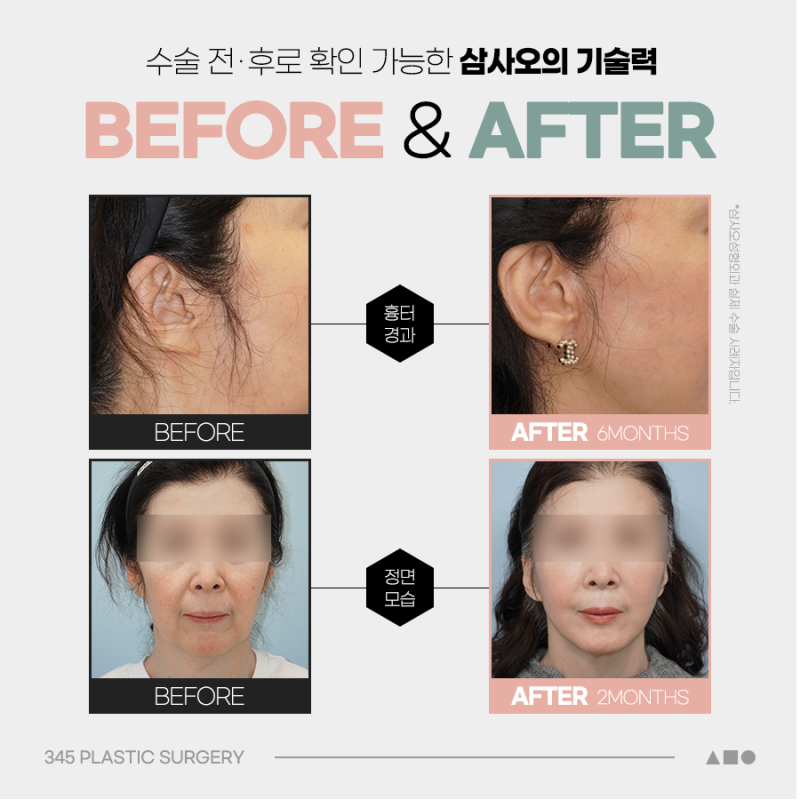
Recovery and Safety Systems for Secure Results
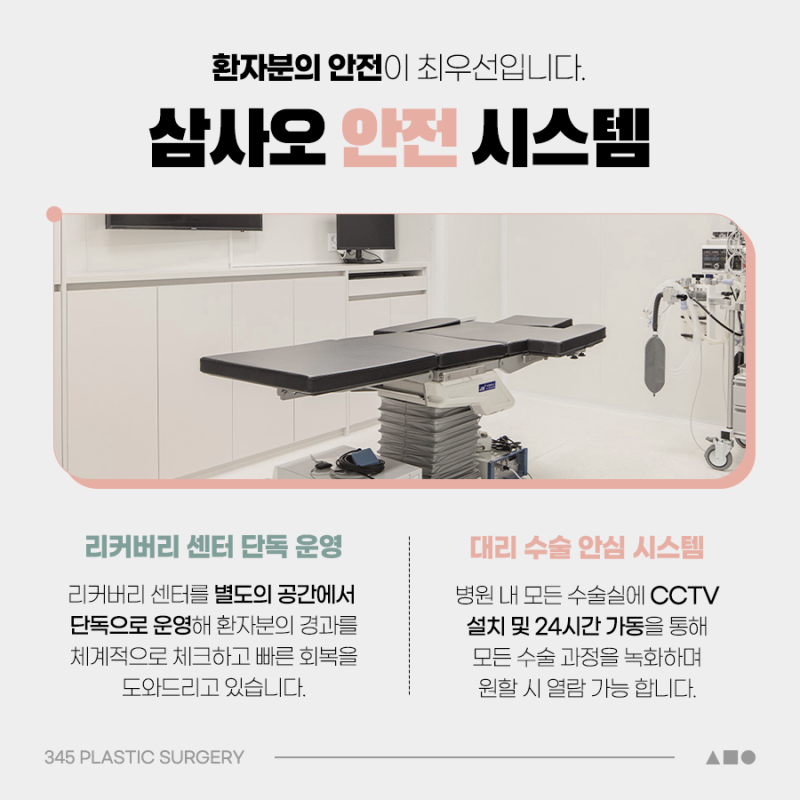
Because it is a highly difficult surgery, safety systems must also be carefully evaluated. 345 Plastic Surgery is equipped with the following systems for patient safety and rapid recovery:
- Recovery Center Operation: We systematically check postoperative progress and provide customized care to help you quickly return to your daily life.
- Operating Room CCTV Safety System: To relieve anxiety about ghost surgeries, we operate 24-hour CCTVs, and you can check the process if desired.
Conclusion: 'Who' Performs the Surgery is Most Important
A facelift is a highly challenging field that requires a harmony of anatomical knowledge and surgical proficiency. It is crucial to consult with highly experienced medical staff, such as Chief Director Han Kyu-nam, who has over 3,000 surgical cases and has been selected as a Key Doctor for lifting.
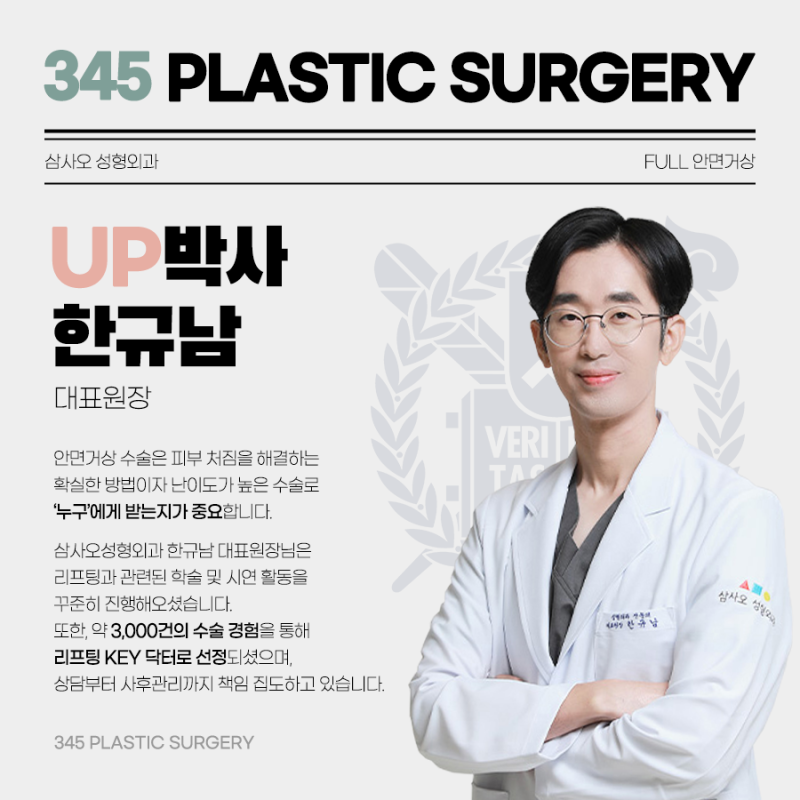
We hope you establish an optimized surgical plan through in-depth consultation and regain a healthy, elastic, and youthful face.
Frequently Asked Questions
Who is a good candidate for a facelift?
Yes, a facelift is recommended for individuals concerned with deep wrinkles and a sagging jawline. It is a suitable surgery for those who were not satisfied with the results after simple laser or thread lifting procedures, or who desire a long-lasting and clear lifting effect.
How much should be lifted during a facelift for effective results?
For effective results, it is necessary to lift four layers: not only the epidermis but also the SMAS layer, retaining ligaments, and temporal fascia. If only the skin surface is lifted, the duration of the effect may be short and unnatural, so it is important to address the root causes of aging deep within the skin.
I'm worried about significant scarring after the surgery.
No, you don't need to worry much about scarring. We make a fine incision along the ear line in an inconspicuous area and meticulously suture it, ensuring that scars are barely visible after recovery.
Why is the dissection process important in a facelift?
Dissection is the process of separating skin tissue and muscle layers, and it determines the success of the surgery. Precisely separating the tissues surrounding the SMAS layer is crucial to prevent uneven skin and maintain a smooth lifting result for a long time.
How can concerns about ghost surgery be alleviated?
Concerns about ghost surgery can be alleviated through our operating room CCTV safety system. We operate CCTV 24 hours a day, and patients can directly verify the surgical process if they wish, making it safer and more trustworthy.