2026-06-04
Worried About Cheek Sagging After Zygoma Reduction? Effects and Features of Zygoma Lifting (Gwang-fting)
For those concerned about skin sagging after zygoma reduction, we introduce 'Zygoma Lifting (Gwang-fting)', a procedure combining bone surgery with a mini-lift. If you have low skin elasticity or anticipate cheek sagging, this procedure utilizes a dual-adhesion method to help you achieve both a firm V-line and a smooth facial contour simultaneously.

Why Does Cheek Sagging Occur After Zygoma Reduction?
When considering zygoma reduction, a type of facial contouring surgery, the biggest concern is often 'post-operative cheek sagging.' As the volume of the cheekbone decreases, the skin and soft tissues covering it are left behind. If the skin is thin or lacks elasticity, it can sag downward due to gravity.
To alleviate these concerns, 345 Plastic Surgery proposes 'Dual-Adhesion Zygoma Lifting (Gwang-fting),' which combines FULL zygoma reduction with a mini-lift. This is a comprehensive solution that simultaneously considers changes in both the bone and the soft tissue.
Who Needs Dual-Adhesion Zygoma Lifting (Gwang-fting)?
It is suitable for those who need to consider the harmony and elasticity of their overall facial contour, rather than simply reducing the cheekbones.
- Those with prominent cheek hollowing below the side cheekbones
- Those with a large zygomatic bone structure and decreased skin elasticity
- Those with bulging and sagging above the mid-cheek grooves (Indian bands) or nasolabial folds
- Those who already have sagging symptoms before zygoma surgery or are strongly expected to experience sagging
- Those who want a slender facial line change without square jaw reduction surgery

Synergy Effect of FULL Zygoma Reduction and 4-Layer Lifting
Zygoma lifting is a procedure that combines the technique of firmly fixing the bone with the technique of powerfully lifting the soft tissues.
1. Sturdy Dual Fixation System
It simultaneously improves the front, side, and 45-degree cheekbones, and by dual-fixing the cheekbones, it prevents non-union (where the bones fail to heal properly) and precisely aligns symmetry.
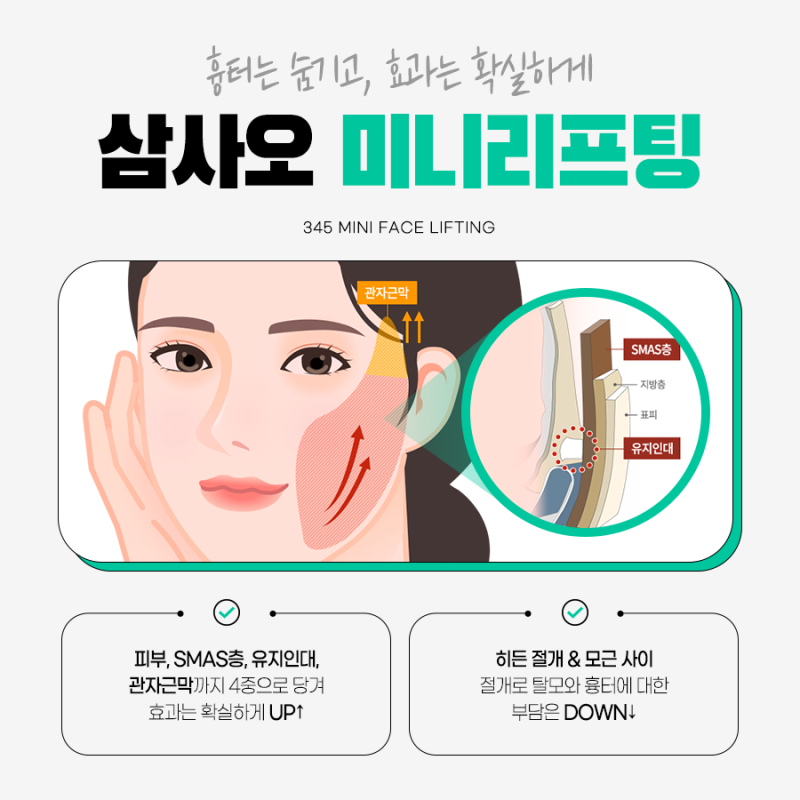
2. 4-Layer Complex Lifting (Skin + SMAS + Retaining Ligaments + Temporal Fascia)
Rather than simply pulling the skin surface, it pulls 4 layers including the SMAS layer (fascia), retaining ligaments, and temporal fascia beneath the skin, allowing you to expect progressively improving elasticity after the procedure. By using a hidden incision method, scar exposure is minimized, and hair follicle damage is reduced to lower the risk of hair loss.
Why Should It Be 'Zygoma Lifting'?
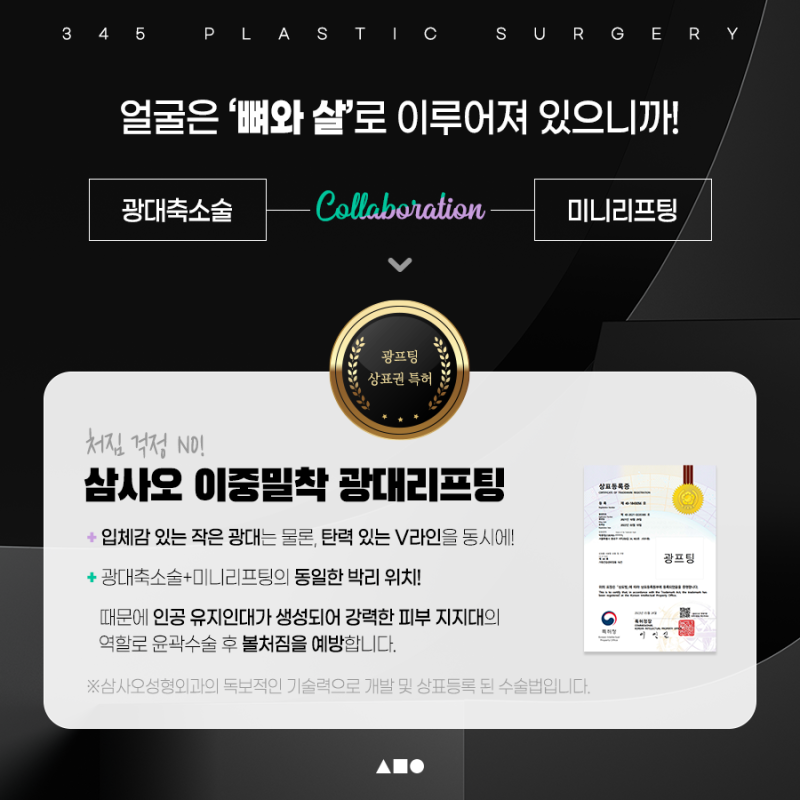
Zygoma reduction and mini-lifting share similar dissection (the process of separating skin tissue) locations. The artificial retaining ligaments created during the surgery act as a new support for the skin, helping to effectively prevent cheek sagging that can occur after contouring surgery. Through this, we aim for two results simultaneously: a small, three-dimensional face and a firm V-line.
Enhancing Safety and Expertise Through Specialist Collaboration
345 Plastic Surgery has a collaborative system of medical professionals with abundant clinical experience in their respective fields.
- Facial Contouring: Chief Director Park Jong-lim, who has over 10,000 surgical cases of experience, repositions the bone structure.
- Lifting: Chief Director Han Kyu-nam, who has extensive clinical experience in lifting, precisely corrects soft tissue sagging.
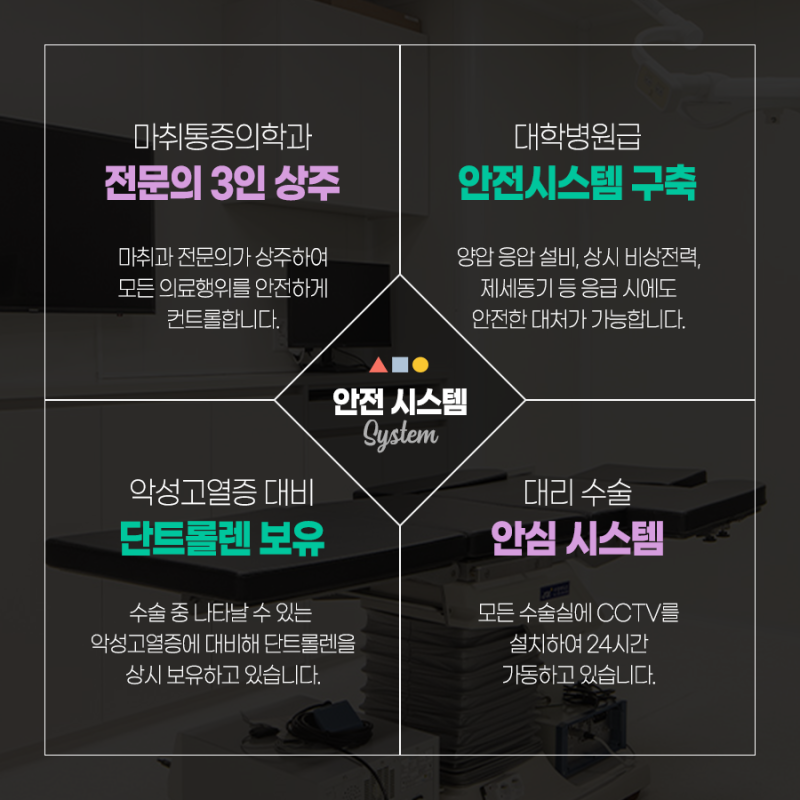
In addition, with three resident anesthesiologists, a university hospital-level safety system, and CCTV installations, we eliminate anxiety about ghost surgeries and provide a safe surgical environment.
If you are worried about changes after zygoma reduction, it is important to establish an appropriate treatment plan tailored to your skin type and bone structure through sufficient consultation with a specialist.
Frequently Asked Questions
Why does cheek sagging occur after zygoma reduction surgery?
It occurs because the remaining skin and soft tissues sag downwards due to gravity as the bone volume decreases. This phenomenon can occur more easily, especially if the skin is thin or lacks elasticity, so it is important to consider the elasticity of the skin before surgery.
What kind of surgery is Zygoma Lifting (Gwang-fting)?
Yes, it is a complex solution that combines FULL zygoma reduction surgery with mini-lifting. It reduces the size of the bone while simultaneously lifting the soft tissues in four layers, including the skin, SMAS layer, retaining ligaments, and temporal fascia, to prevent sagging that may occur after zygoma reduction.
Are there concerns about scars or hair loss during zygoma lifting surgery?
Yes, we have reduced the risk of scar exposure and hair loss by using a hidden incision method. By incising in an inconspicuous area and applying techniques that minimize hair follicle damage, the burden of post-surgical scars is reduced.
How do you prevent non-union, a side effect where bones do not heal properly?
We prevent non-union through a robust dual fixation system. While simultaneously improving the front, side, and 45-degree zygoma, the zygomatic bone is firmly fixed in a dual manner to ensure that the bones do not separate and that symmetry is precisely achieved during the surgery.
What are the advantages of combining zygoma reduction surgery with mini-lifting?
The dissection locations of the two surgeries are similar, allowing for a synergistic effect. The artificial retaining ligaments created during the surgical process act as new support for the skin, effectively preventing cheek sagging and creating a small, three-dimensional face.