2026-06-04
Breast Revision Clinic Selection Criteria and Timing: In-Depth Analysis of Causes Like Capsular Contracture
For those considering a breast revision clinic due to dissatisfaction or side effects after their initial breast surgery, we detail the main causes requiring revision and the appropriate surgical timing (after 6 months). Discover how to regain a safe and natural breast line through solutions for implant rupture and capsular contracture, along with a precise surgical process utilizing an endoscope.

Looking for a Breast Revision Clinic? A Thorough Analysis from Causes to Timing is Essential
As the demand for breast surgery increases, so does the available information. However, a growing number of people are looking into breast revision clinics due to unsatisfactory results or side effects from their initial surgery. Since revision surgery is a highly difficult procedure that deals with already damaged tissue, it is crucial to choose a clinic that precisely analyzes the causes of failure and is equipped with a systematic safety system.
In today's post, we will outline the primary factors that require breast revision, the appropriate timing for the surgery, and key checkpoints for achieving highly satisfactory results.
4 Major Causes Requiring Breast Revision Surgery
The reasons for deciding on revision surgery vary widely, ranging from simple aesthetic dissatisfaction to medical functional issues. The most common cases are as follows:

- Implant Rupture and Deformation: This occurs when the implant is ruptured, causing a change in shape or leakage.
- Aesthetic Dissatisfaction: This is performed when the breast size is smaller or larger than expected, making it disproportionate to the body shape.
- Capsular Contracture and Pain: This happens when the breasts become abnormally hard or are accompanied by pain; managing the capsule is key here.
- Asymmetry: Correction is needed when the shape or height of both breasts do not match, resulting in a visually obvious difference.
In addition to these, there are various individual variables, so it is necessary to accurately assess the internal condition through precise ultrasound as well as visual examinations.
Breast Revision Timing: Why You Should Wait '6 Months'
While those seeking revision surgery often want a quick correction, it is generally recommended to wait at least 6 months after the initial surgery.
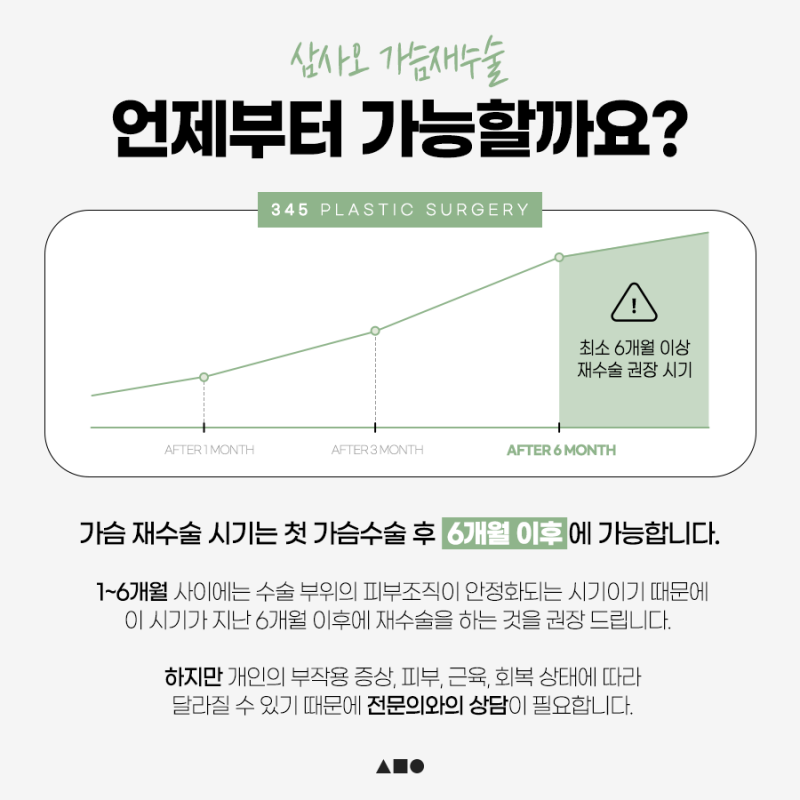
Between 1 and 6 months post-surgery, the internal skin tissues and muscles are in the process of adhering and stabilizing. Operating again during this period can cause scar tissue to harden further or delay recovery. However, in cases requiring urgent treatment, such as implant rupture or severe infection, the timing may be advanced based on a specialist's judgment, so a consultation must come first.
345 Plastic Surgery's Precise Breast Revision Solutions
In revision surgery, accurately eliminating the cause of failure is the top priority. At 345 Plastic Surgery, we support stable recovery through the following specialized processes:
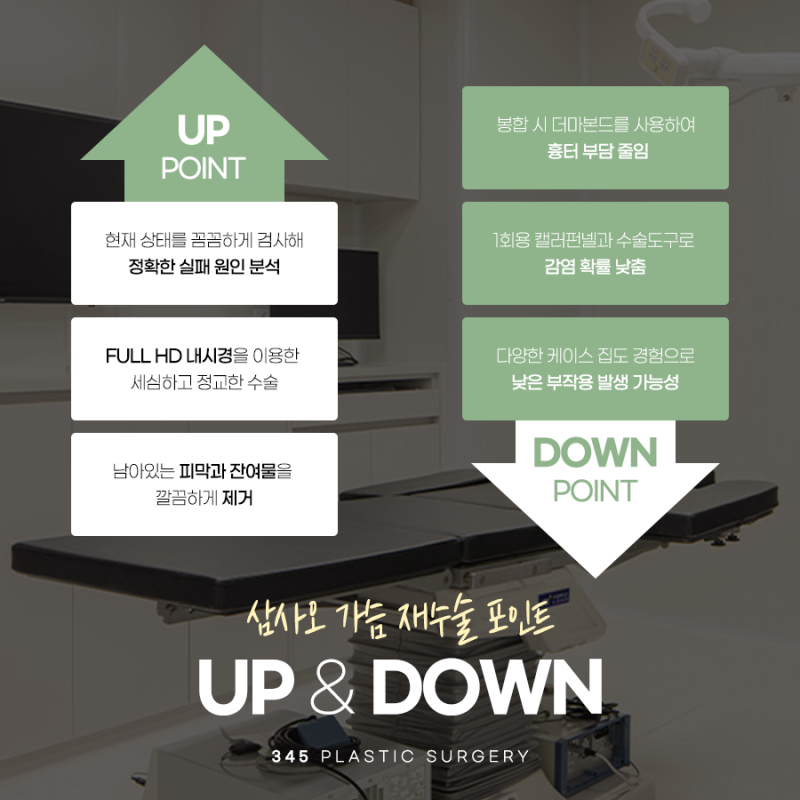
- Utilization of FULL HD Endoscopy: By viewing the hard-to-see internal areas in real-time, we reduce nerve and blood vessel damage and perform precise dissection.
- Thorough Capsule Removal: We aim for a soft touch by cleanly removing the thickened capsule and residue that cause capsular contracture.
- Infection Minimization System: Using a disposable Keller Funnel minimizes skin contact during implant insertion, lowering the probability of infection.
- Reducing Scar Burden: Utilizing Dermabond and similar products during suturing reduces the hassle of stitch removal and aids in scar management.
Personalized 'Golden Ratio Breast' Design
Revision surgery is not just about replacing the implant; it is the process of re-establishing a line optimized for your body shape.
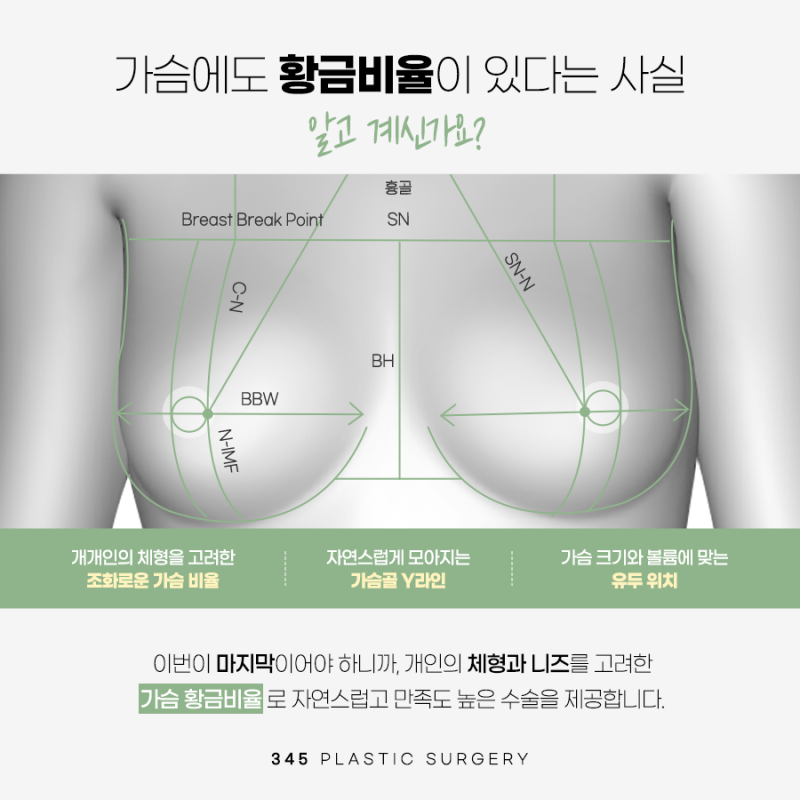
- A harmonious ratio considering the size of the rib cage, skin elasticity, and the position and angle of the breasts
- Creation of a naturally gathered Y-line cleavage
- Precise nipple position adjustment tailored to body shape and volume
To ensure this surgery can be your last, we coordinate the patient's needs with medical possibilities to establish a highly satisfactory design.
A Reassuring Surgical Environment and Expert Medical Team
The higher the difficulty of the revision surgery, the more important it is to verify the clinic's safety systems and the medical team's proficiency.
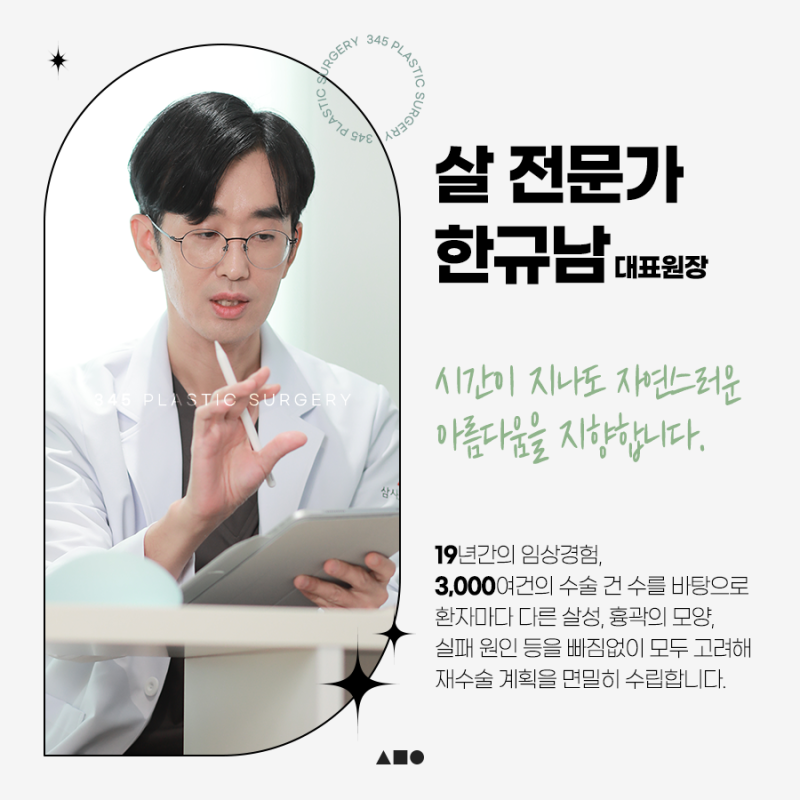
- Clinical Experience: Chief Director Han Kyu-nam possesses over 19 years of experience and more than 3,000 surgical cases.
- Resident Anesthesiologists: Three anesthesiology and pain medicine specialists are on-site to monitor the entire surgical process.
- Emergency Preparedness System: We maintain university hospital-level safety equipment and always stock 'Dantrolene,' an orphan drug for malignant hyperthermia.
- Recovery Center: We operate an exclusive care space dedicated solely to stable post-operative recovery.
Because breast revision involves more tissue damage and a more complex structure than the initial surgery, the surgeon's meticulous technical skill makes all the difference in the outcome. We hope you regain a healthy and beautiful breast line through a careful selection.
Frequently Asked Questions
When is breast revision surgery possible after the initial surgery?
It is generally recommended to perform breast revision surgery at least 6 months after the initial surgery. This is because the period between 1 and 6 months after surgery is when the internal skin tissue and muscles adhere and stabilize. However, if urgent treatment is required due to implant rupture or severe infection, the timing can be brought forward after consultation with a specialist.
What are the main reasons for deciding to undergo breast revision surgery?
The four main reasons are implant rupture and deformation, aesthetic dissatisfaction, capsular contracture and pain, and asymmetry. Revision surgery is considered when the breasts become abnormally firm, when the shape of both breasts differs, or when the size does not match the body type, and a precise ultrasound is needed to assess the internal condition.
What is the most important aspect of revision surgery due to capsular contracture?
Thorough removal of the thickened capsule and residual material that cause capsular contracture is the most important aspect. Clean removal of the capsule is necessary to restore a soft feel, and a precise dissection process using a FULL HD endoscope is required to minimize nerve and blood vessel damage.
How are infection and scars managed during breast revision surgery?
Disposable Keller Funnel and Dermabond are used to reduce the probability of infection and minimize scar burden. A system that minimizes skin contact during implant insertion is applied, and Dermabond, a medical adhesive, is used to close the incision site, reducing the hassle of stitch removal and promoting smooth scar healing.
Is there a system in place to prepare for emergencies during surgery?
Yes, we always have university hospital-level safety equipment and Dantrolene, a treatment for malignant hyperthermia. In addition, three anesthesiologists are stationed at the hospital to monitor the entire surgical process in real-time, establishing a system that can respond quickly and safely to any emergency.