2026-06-04
Facelift and Upper Blepharoplasty Case in a Patient in Her 60s: Jowl Removal and Natural Lifting
We introduce a complex case of a female patient in her mid-60s who underwent a facelift, neck lift, upper blepharoplasty, and buccal fat removal. We analyze the process of achieving a softer, more refined impression by improving drooping eyelids and jowls in the lower face from a medical perspective.
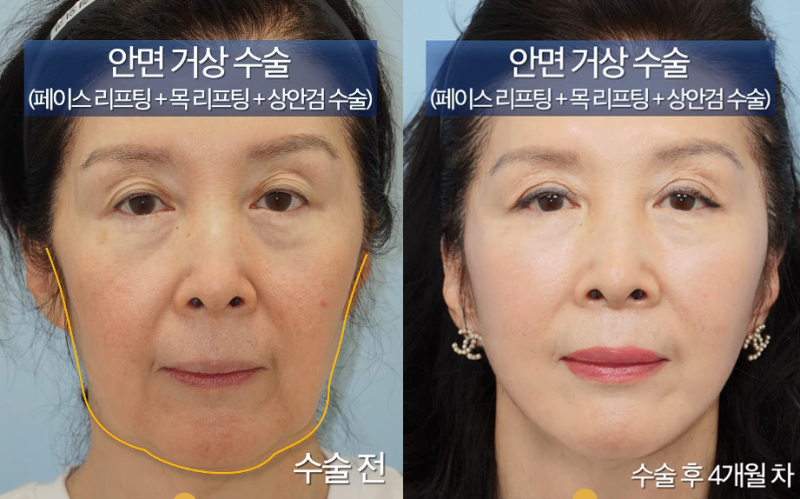
Complex Aging Concerns and Surgical Approaches for Patients in Their 60s
Facial changes that occur with age go beyond simple skin sagging. As patients enter their 60s, they often experience a combination of issues, including hollow fat around the eyes, upper blepharoplasty concerns (drooping eyelids) due to loose skin, and the so-called 'jowl' (bulldog cheek) phenomenon caused by lower facial fat sagging downward.
The case we are introducing today involves a female patient in her mid-60s who had an overall elegant impression but was concerned about lower facial sagging and changes in her eye shape due to the passage of time. By actively reflecting the patient's needs, we excluded unnecessary procedures and planned the most effective lifting approach.
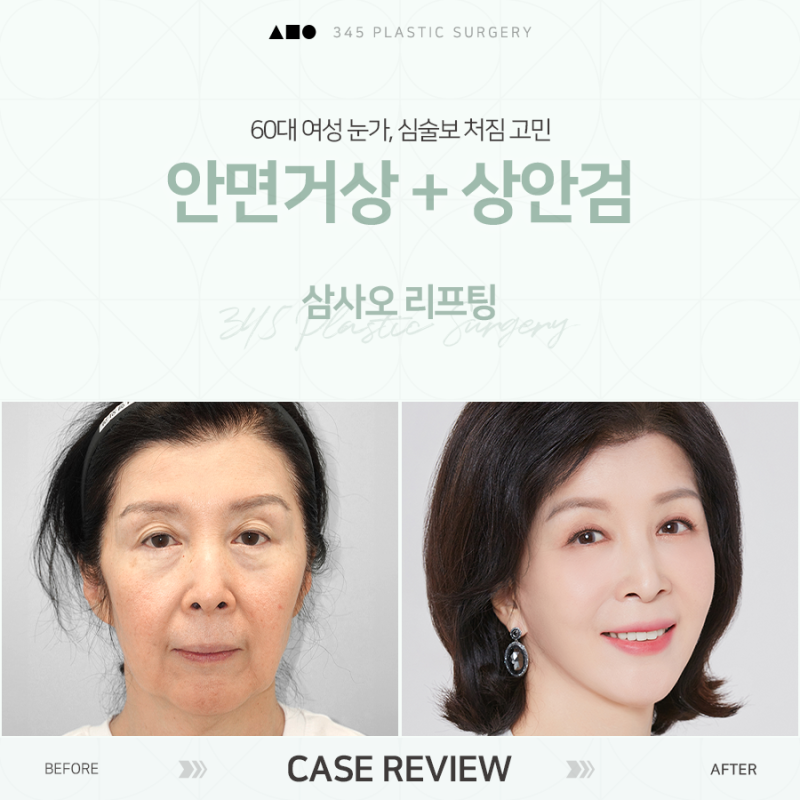
Customized Surgical Plan: The Harmony of Upper Blepharoplasty and Facelift
During the consultation, the patient first mentioned the deformation of her existing double eyelid line and the hollowing above and below her eyes. She also wanted to improve the sagging skin extending around her mouth, which created a darker impression. Accordingly, we established the following customized surgical plan.
- Upper Blepharoplasty: Excision of sagging skin and realignment of the asymmetrical double eyelid line to create a clear, defined eye shape.
- Facelift and Neck Lift: Upward repositioning of sagging tissues in the lower face and neck line.
- Jowl Removal and Volume Supplementation: Adjustment of protruding buccal fat and subcutaneous fat, with the extracted fat grafted into the hollow areas around the eyes.
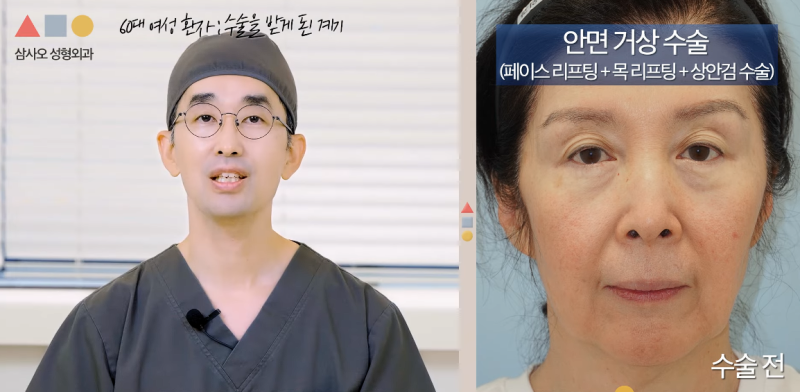
The Importance of Three-Dimensional Correction Beyond Simple Lifting
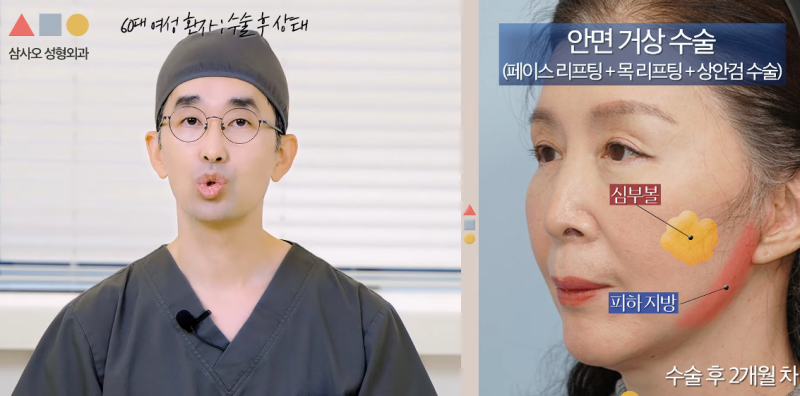
The core of a facelift lies not simply in pulling the skin, but in restoring the three-dimensional volume of the face. In this case, to improve the bulging jowl area in the lower face, we simultaneously adjusted two layers: the buccal fat and the superficial fat (subcutaneous fat).
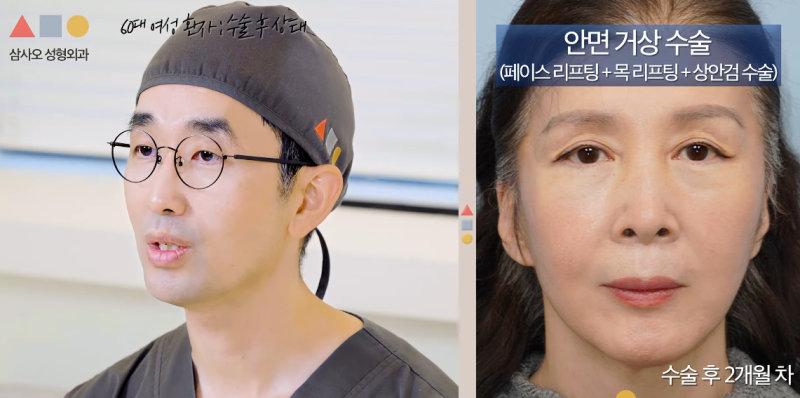
The fat removed in this manner was not discarded but utilized for micro-fat grafting in the hollow areas around the eyes. Thanks to this process, we were able to achieve a smoother and healthier-looking under-eye area without performing a lower blepharoplasty, which the patient did not want.
Facelift Recovery Period and Scar Management
The most common concerns for those considering a facelift are 'scars' and 'swelling.' In the early stages after surgery, the color of the incision site may appear dark, but it gradually fades to match the surrounding skin tone over time. Especially for those with lighter skin tones, scars tend to blend in even more naturally.
Regarding the recovery period, major swelling subsides after about 3 to 4 weeks, allowing for a natural return to daily life. However, minor residual swelling can last from 2 to 6 months. Interestingly, the residual swelling at the one-month mark often has the effect of smoothing out fine lines, making it a time when patients feel most satisfied with their appearance.
Summary and Conclusion
Plastic surgery in one's 60s should focus on 'restoring natural beauty' rather than 'excessive changes.' As seen in this case, a three-dimensional approach—removing unnecessary fat and filling in areas that need volume through accurate anatomical diagnosis—can yield safe and excellent improvement results.
If you are struggling with sagging skin and a collapsed jawline, we recommend consulting with an experienced board-certified specialist to establish the most suitable plan for you.

Frequently Asked Questions
What is the focus of a facelift surgery for people in their 60s?
Facelift surgery for people in their 60s focuses on restoring the three-dimensional volume of the face, beyond simply pulling the skin. It concentrates on regaining natural beauty, and through accurate anatomical diagnosis, unnecessary fat is removed while needed areas are filled using a three-dimensional approach, achieving safe and favorable improvement.
How is jowl removal performed?
Jowl removal is performed by simultaneously adjusting two layers, the deep buccal fat and the superficial subcutaneous fat, to improve the prominent jowl area of the lower face. The removed fat is not discarded but is used for micro-fat grafting in sunken areas around the eyes, helping the under-eye area look smoother and healthier.
How long is the recovery period after a facelift surgery?
After facelift surgery, significant swelling subsides in about 3-4 weeks, allowing for a natural return to daily life. However, subtle residual swelling can persist for 2 to 6 months. Residual swelling at the one-month mark can also have the effect of smoothing out fine wrinkles.
How are facelift surgery scars managed?
Initially after facelift surgery, the incision site may appear darker, but it gradually fades to a color similar to the skin over time. Especially for those with lighter skin tones, scars tend to be more naturally concealed.
In what cases is upper blepharoplasty necessary?
Upper blepharoplasty is necessary for problems such as sunken fat around the eyes and sagging eyelids due to loose skin as one ages. It helps to create clear eyes by excising loose skin and realigning asymmetrical double eyelid lines.
Can under-eye hollowness also be improved through fat grafting?
Yes, it can be improved. During facelift surgery, the removed deep buccal fat and subcutaneous fat can be used for micro-fat grafting in sunken areas around the eyes. Through this process, you can expect the under-eye area to look smoother and healthier, even without lower blepharoplasty.