2026-06-04
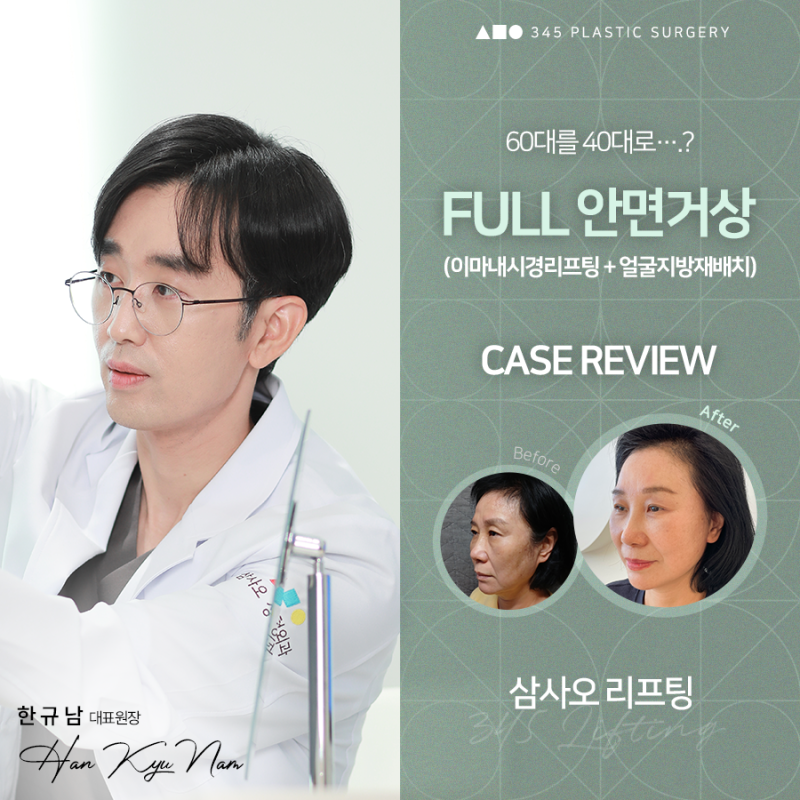
Facelift Review in Your 60s: A Complex Lifting Case Improving Both Sagging and Volume Loss Simultaneously
Through a real case of a patient in her early 60s undergoing a facelift and endoscopic forehead lift, we detail a customized lifting process that simultaneously resolves facial sagging and volume loss caused by aging. We provide systematic recovery information, from pre-operative diagnosis to stitch removal on day 10 and scar progress after 6 months.
Aging Concerns in Your 60s: How to Resolve Facial Sagging and Volume Loss Simultaneously?
As skin elasticity decreases with age, it is accompanied not only by simple sagging but also by a 'hollowing' phenomenon where volume is lost in specific areas. Particularly after your 60s, changes around the eyes and the midface (middle part of the face) become prominent, making the overall impression look dark or tired.
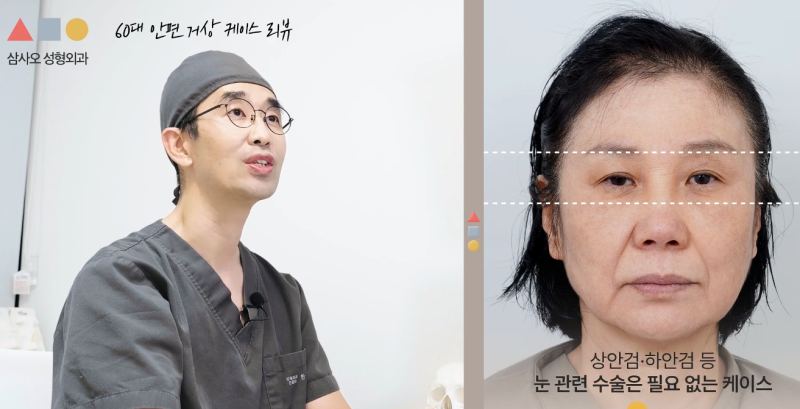
The subject of the facelift review we are introducing this time is a woman in her early 60s who was concerned about typical nasolabial folds, wrinkles around the mouth, and a collapsed jawline. Since the patient's condition allowed for an improvement in her impression without eye-related surgery, we proceeded with the surgery by combining an endoscopic forehead lift and a facelift to balance the entire face.
The Synergy Effect of an Endoscopic Forehead Lift and Facelift
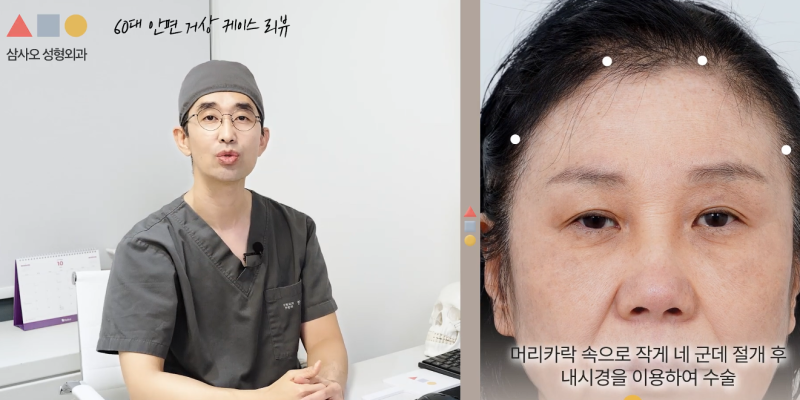
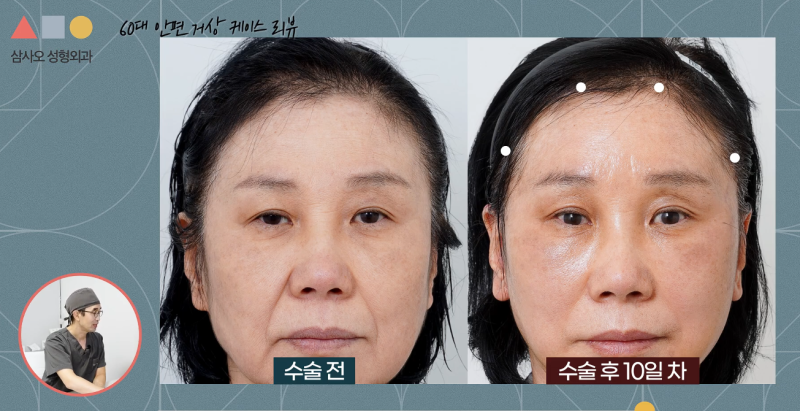
When the forehead sags, the position of the eyebrows lowers, which can unconsciously create a frowning appearance. An endoscopic forehead lift is a surgery that does not directly excise the skin; instead, it secures a precise field of vision with an endoscope through four small incisions within the scalp, and then pulls the eyebrow and forehead tissues upward to fix them.
By combining a facelift with this, a lifting line extending from the upper face to the lower face is formed, allowing you to expect more natural results. The core of this surgery is to refreshingly improve the eye shape and forehead line while reducing the burden of visible scars.
The Facelift Process: The Necessity of Liposuction and Buccal Fat Removal
Facial aging in Asians is characterized not simply by sagging skin, but by the accumulation of fat under the chin or in the jowl area. Therefore, for a successful facelift, a process of reducing the weight of the tissues is necessary, rather than just pulling the skin.
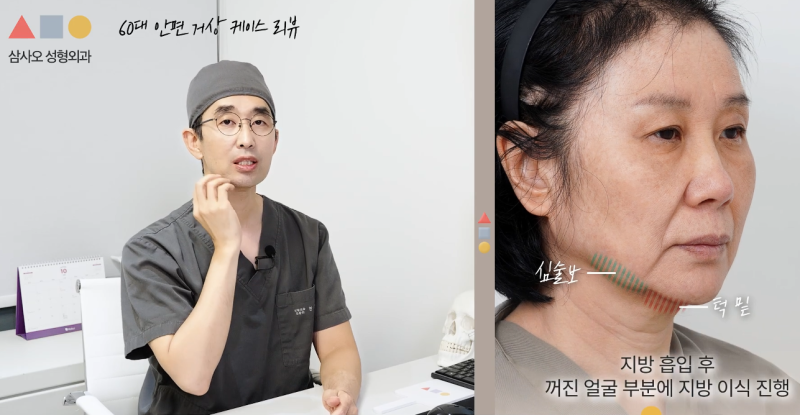
- Buccal Fat Removal: Appropriately removes the buccal fat pad, which is fat deep within the face, to improve the cause of sagging.
- Facial Liposuction: Cleans up unnecessarily accumulated fat along the jawline and jowls.
- Fat Grafting: Conversely, fills in hollowed areas lacking volume with fat to restore a three-dimensional effect.
Through this complex approach, nasolabial folds and marionette lines that were sagging like a 'hammock' can be repositioned to their original locations.
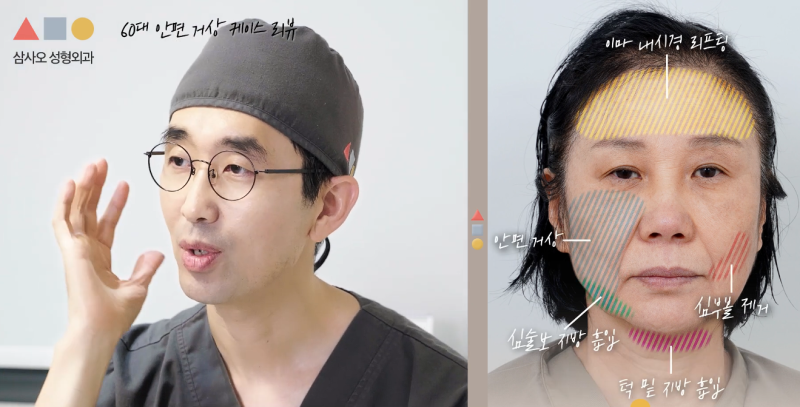
Pre-operative Condition Analysis and Day 10 Recovery Process
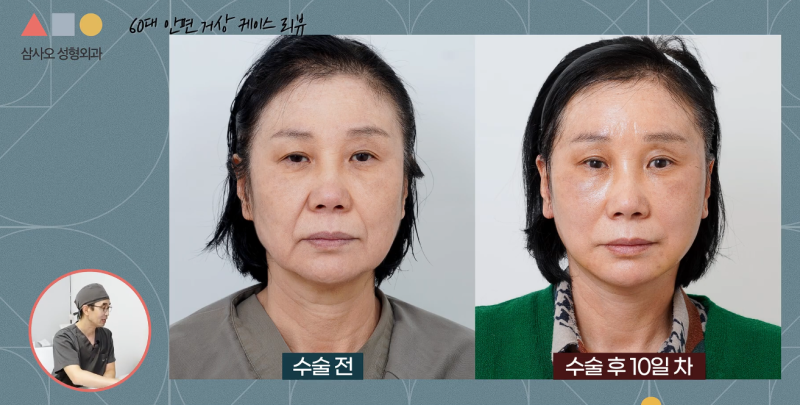
Before surgery, the patient's nasolabial folds and the line extending from the corners of the mouth to the jawline were blurred. When viewed from a 45-degree angle, the tissues sagged downward, tending to make the midface appear longer.
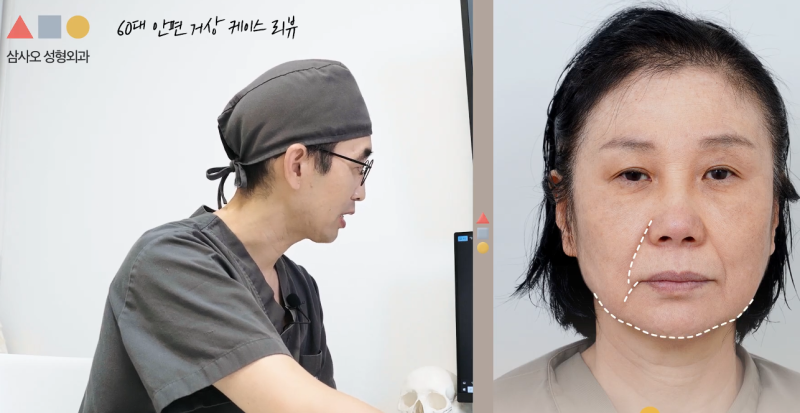
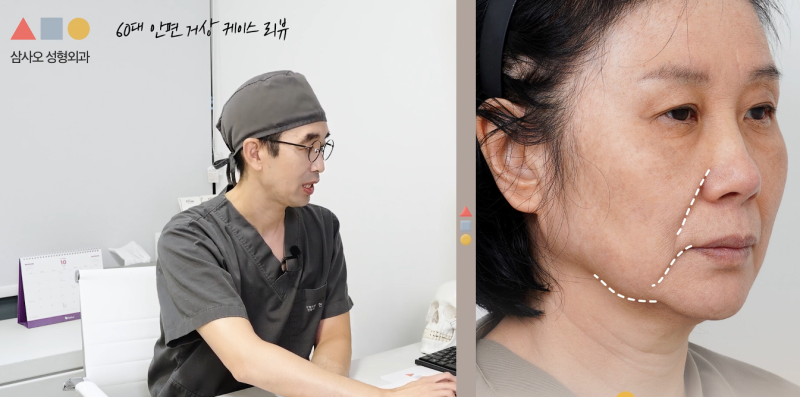
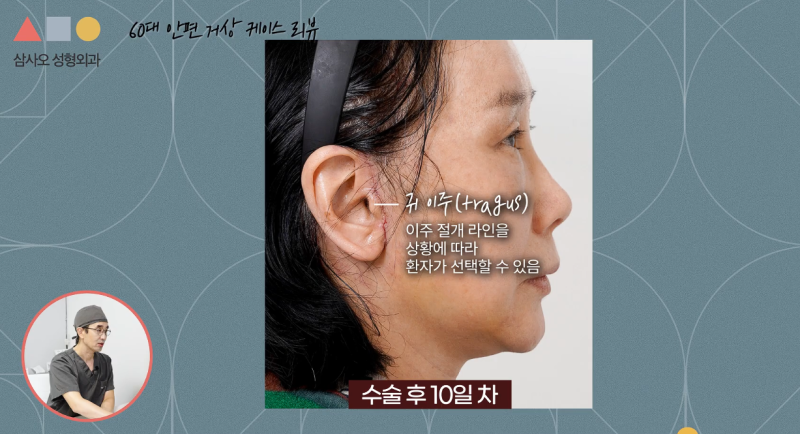
Stitches are removed on the 10th day after surgery. At this time, although there are individual differences, some swelling remains, so the face may look somewhat puffy, but bruising appears only faintly around the mouth and under the jawline. Thanks to the incision method that goes inside the hairline and follows the ear line, you can sufficiently cover it with your hair and return to daily life in about 10 days.
Precise Incisions Without Scar Worries and Progress After 6 Months
The most concerning part during a facelift is the scarring. At 345 Plastic Surgery, we hide the incision line according to the patient's characteristics based on the 'tragus' line in front of the ear. In addition, we suture precisely so that excessive skin tension (pulling force) is not applied during surgery, lowering the possibility of hypertrophic scars or keloids.
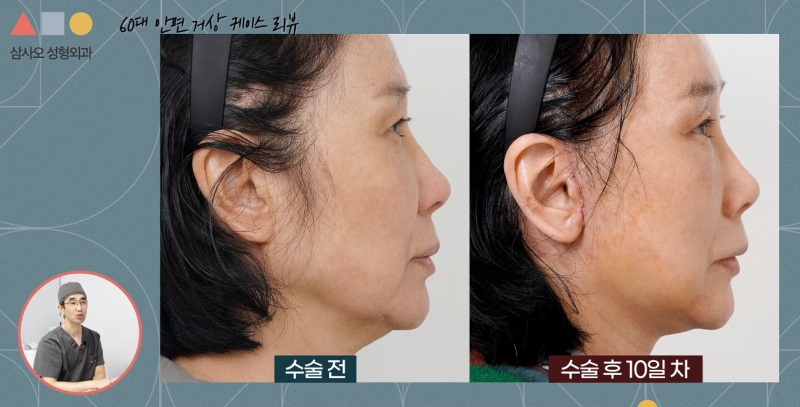
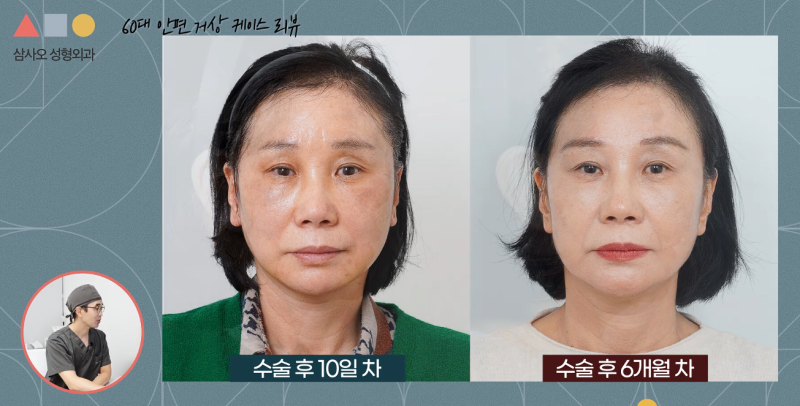
After 6 months post-surgery, all residual swelling subsides, the jawline becomes clearly defined, and the incision site naturally blends with the skin boundary, settling to a point where it is difficult to notice unless viewed up close.
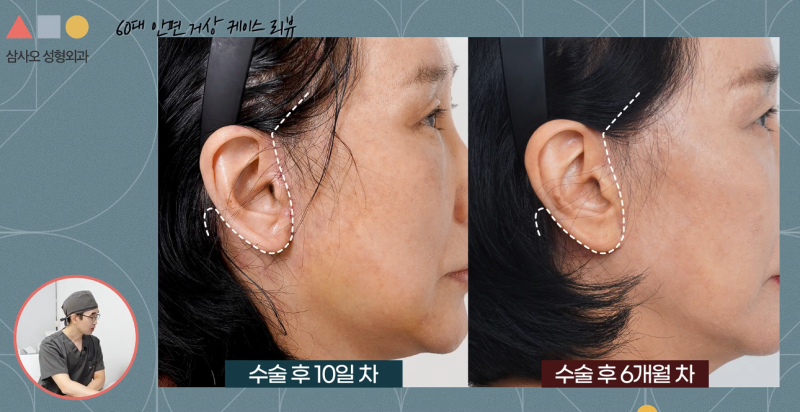
Lifting surgery methods must vary depending on the individual's degree of sagging, skin thickness, and skeletal structure. For satisfactory results, it is important to establish the most suitable surgical plan for yourself through sufficient consultation with a specialist.
Frequently Asked Questions
For a 60-year-old facelift, is liposuction or fat grafting also necessary?
Yes, it is effective to perform them together. Aging in Asians often involves fat accumulation under the chin or in jowls, so liposuction and deep cheek fat removal are needed to reduce weight. Conversely, for areas with lost volume, fat grafting can add dimension, leading to more natural lifting results.
How is endoscopic forehead lifting performed?
It is performed endoscopically through four small incisions within the scalp. This method involves precisely securing the visual field without directly excising the skin, then lifting and fixing the eyebrow and forehead tissues upwards. This reduces the burden of scars while significantly improving the eye and forehead lines.
When can I return to daily life after a facelift?
Typically, you can return to daily life about 10 days after the surgery. Stitches are removed on the 10th day, and while there might be some swelling and faint bruising, it can be easily covered by hair. Although there are individual differences, recovery is relatively fast.
I'm worried about significant scarring after surgery.
Since the incision is made precisely along the front of the ear, you can worry less about scars. The incision line is hidden along the tragus in front of the ear, tailored to the patient's characteristics, and sutured to avoid excessive skin tension, thereby lowering the possibility of scar formation. After 6 months, the scars become natural and difficult to notice unless viewed up close.