2026-06-04
Lifting for People in Their 60s: Facelift, Upper and Lower Blepharoplasty Recommendations, and a Customized Anti-Aging Surgery Guide for Your Concerns
As you enter your 60s, decreased skin elasticity can easily make your expression look tired and dark. 345 Plastic Surgery explains in detail the differences between a facelift and upper/lower blepharoplasty—which balance the eyes and lower face rather than just pulling the skin—along with customized lifting strategies for each individual.

Lifting in Your 60s: More Than Just Pulling the Skin
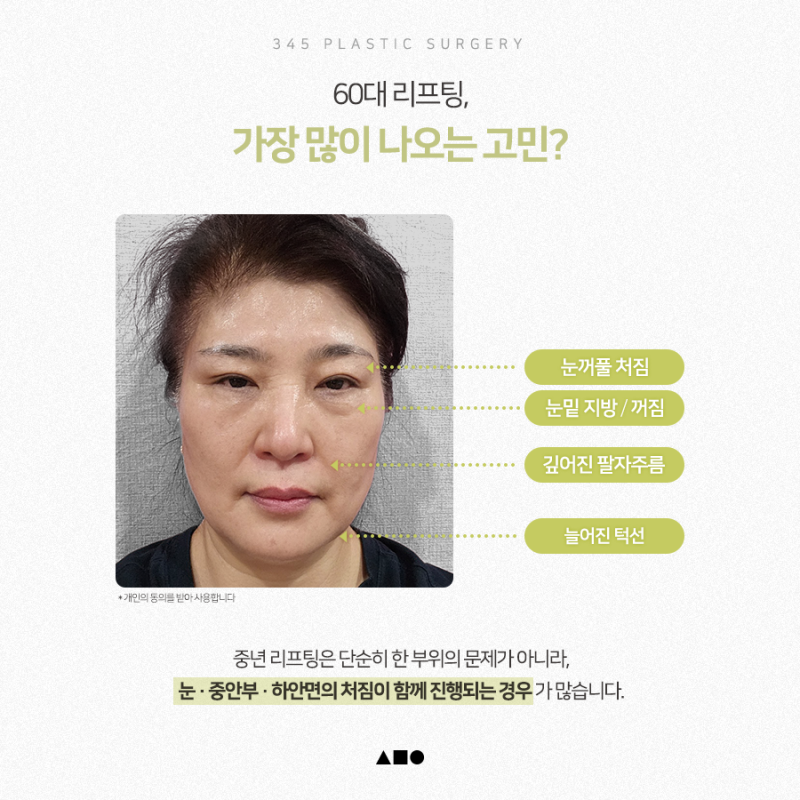
Many people entering their 60s express concerns that go beyond just getting wrinkles, often saying, "My impression isn't what it used to be." This is because sagging eyelids, deepened nasolabial folds, and a collapsed jawline work together to create an overall tired and dark appearance.
Lifting in your 60s is not just a surgery that pulls the surface of the skin. To achieve natural results, it must be accompanied by a process of comprehensively repositioning and refining the collapsed anatomical structures of the eyes, midface, and lower face together.
4 Major Aging Symptoms Middle-Aged Patients Worry About Most
In actual consultations, the areas that patients in their 60s most want to improve are as follows:
- Sagging Eyelids: Obstructs vision or creates a heavy, frustrated impression.
- Under-Eye Fat Bulging and Hollowness: The under-eye area becomes puffy, creating a shadowed look.
- Deepened Nasolabial Folds: Caused by a loss of volume and sagging in the midface.
- Sagging Jawline: The skin of the lower face droops, blurring the facial contours.
These phenomena are not just a problem in one area, but occur as the balance of the entire face collapses simultaneously. Therefore, the key is not "where to pull," but "how harmoniously to refine the overall look."
The Need to Combine a Facelift with Eye Surgery
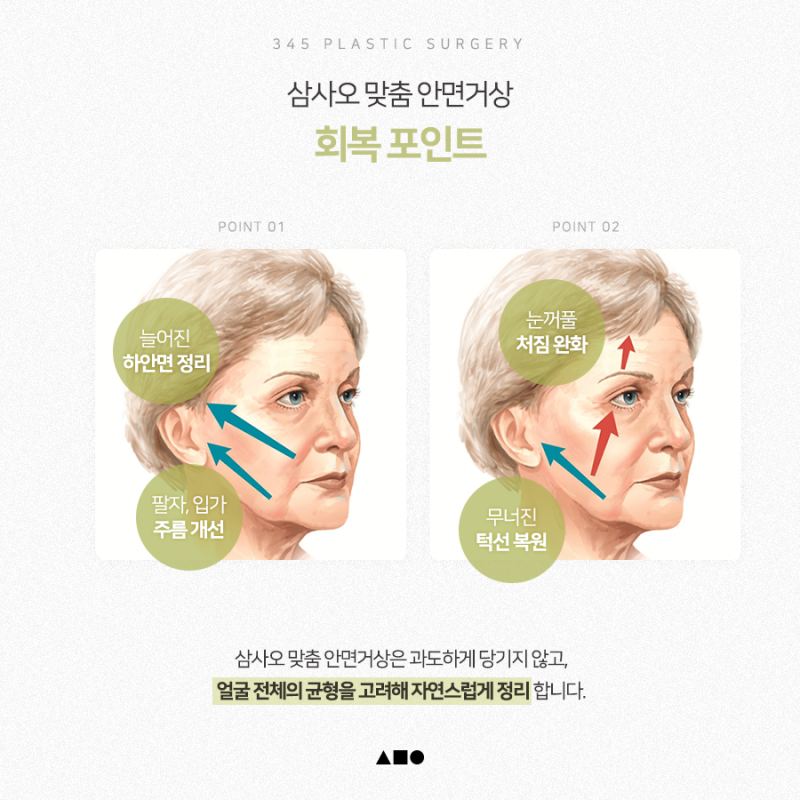
The facelift at 345 Plastic Surgery is designed to refine the sagging lower face, alleviate nasolabial folds and marionette lines, and sharply rebuild a collapsed jawline. However, if only the lower face is improved, it may create an imbalance with sagging eyes. Therefore, if the sagging around the eyes is severe, combining it with middle-aged eye surgery helps improve the overall impression.
Upper and Lower Blepharoplasty: What is the Difference?
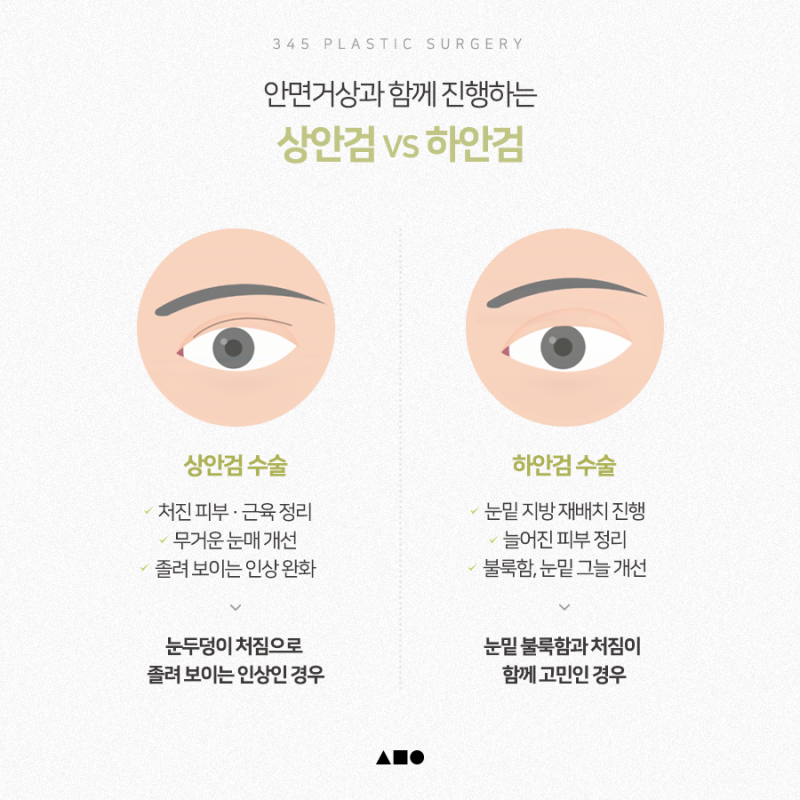
These two surgeries, which are representative of middle-aged eye surgery, have distinct differences in their purpose and target areas.
- Upper Blepharoplasty: Refines the sagging skin and muscles of the upper eyelids to improve a heavy eye shape and alleviate a sleepy-looking impression.
- Lower Blepharoplasty: Improves under-eye puffiness and dark shadows through under-eye fat repositioning and the removal of sagging skin.
Various Surgical Methods Depending on the Cause of Eye Sagging
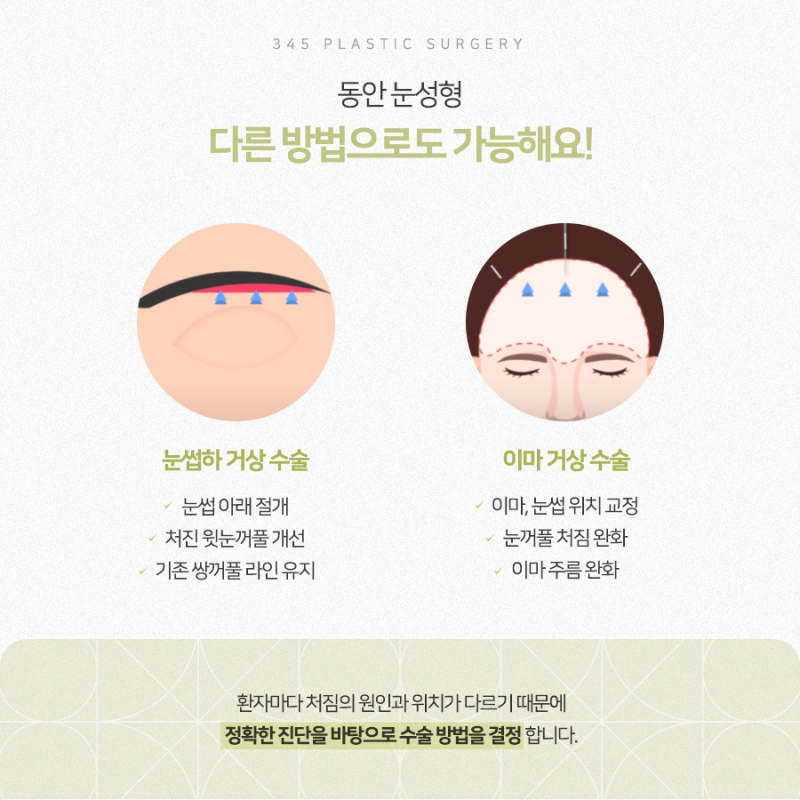
In addition to upper and lower blepharoplasty, the appropriate method may vary depending on the patient's condition.
- Sub-brow Lift: Suitable when you want to naturally improve only the sagging upper eyelids while maintaining your existing double eyelid line.
- Forehead Lift: When the position of the forehead and eyebrows themselves has lowered, this fundamentally alleviates eyelid sagging by pulling everything upward overall.
Changes and Recovery Process Seen Through Real Cases
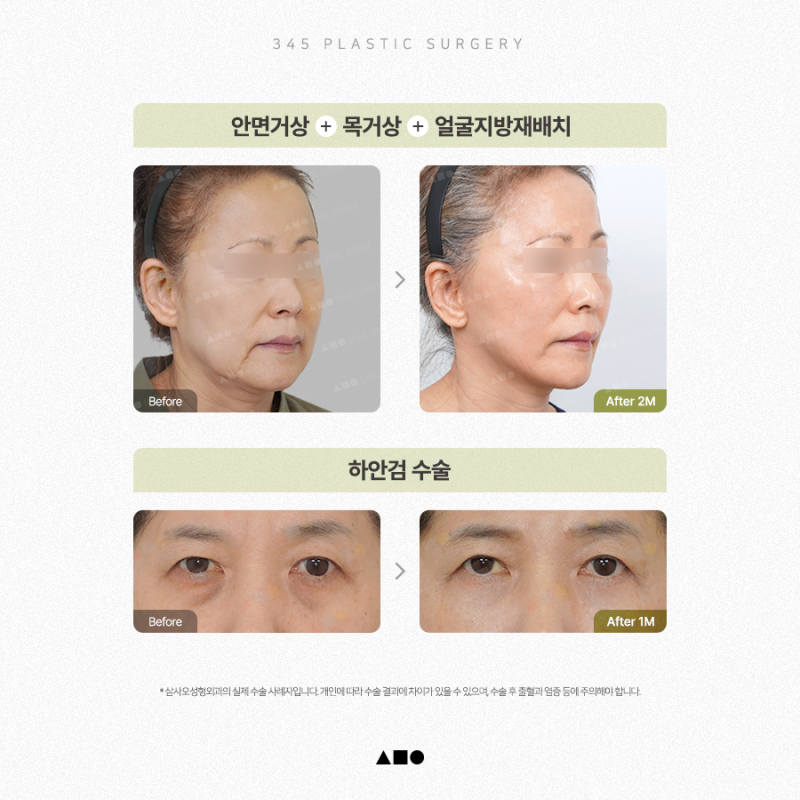
In cases where a facelift, neck lift, and facial fat repositioning were combined, you can see that the lower face is refined, the jawline becomes sharp, and midface sagging is well improved. Lower blepharoplasty also shows a change where under-eye puffiness disappears and the impression becomes much clearer after about one month of progress.
Aftercare System Prioritizing Safety
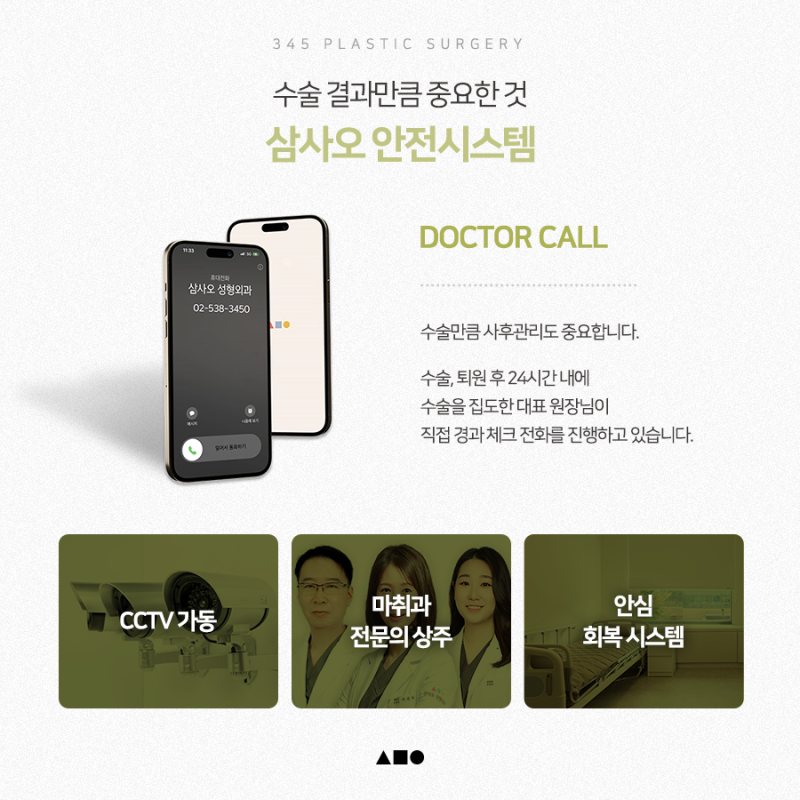
Just as important as the surgical results are a safe process and systematic recovery management. 345 Plastic Surgery operates the following systems for our patients' peace of mind:
- Doctor call service from the attending physician within 24 hours after surgery
- Operating room CCTVs running for transparent surgeries
- Resident anesthesiologist and real-time monitoring
- Personalized, systematic recovery management programs
Lifting in your 60s is not simply about going back to the past, but a process of regaining the healthiest and most distinct contours in your current appearance. We hope you make a careful decision using a method optimized for your individual facial structure.



Frequently Asked Questions
What are the main aging symptoms that people in their 60s are concerned about?
In their 60s, people are most concerned about four aging symptoms: drooping eyelids, protruding and sunken undereye fat, deep nasolabial folds, and a sagging jawline. These symptoms can combine to create a tired and dull impression.
What effects can be expected from a facelift?
A facelift helps to refine a sagging lower face, alleviate nasolabial and mouth wrinkles, and sharpen a collapsed jawline. It contributes to improving overall sagging in the lower facial area, creating a younger and more vibrant appearance.
How do upper blepharoplasty and lower blepharoplasty differ?
Upper blepharoplasty improves heavy eyelids and a sleepy appearance by tidying up sagging upper eyelid skin and muscles. In contrast, lower blepharoplasty aims to improve under-eye puffiness and dark shadows through fat repositioning and removal of sagging skin.
Is a facelift alone sufficient?
No, a facelift alone may not be sufficient. If only the lower face is improved, it can create an imbalance with sagging eyes, so if severe eyelid sagging is present, combining it with middle-aged eye surgeries such as upper and lower blepharoplasty is more effective for overall facial improvement.
Are there other surgical methods to improve drooping eyelids?
Yes, there are various surgical methods depending on the cause of eyelid sagging. These include sub-brow lift, which improves the upper eyelid while maintaining the existing double eyelid line, and forehead lift, which raises the forehead and eyebrow position itself.
How is post-operative recovery managed?
Safe and systematic post-operative recovery management is important. Samsaoh Plastic Surgery operates a 24-hour doctor call service by the attending physician within 24 hours of surgery, operates CCTV in the operating room, has an anesthesiologist on-site with real-time monitoring, and offers personalized recovery management programs.